El Salvador’s Nayib Bukele Is Yet Again Ramping Up His Authoritarian Violence
Nayib Bukele has overseen multiple violent crackdowns on basic civil liberties across El Salvador during his time as president. With his recent declaration of martial law against gangs, it’s only getting worse.
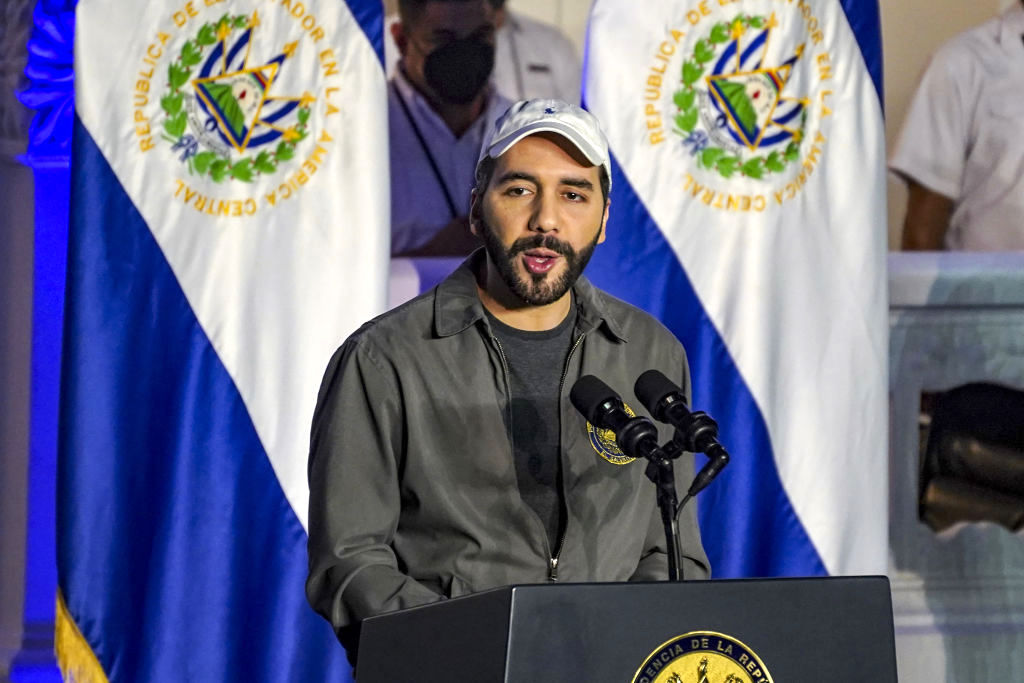
President Nayib Bukele speaks in San Salvador, El Salvador on January 5, 2022. (Camilo Freedman / APHOTOGRAFIA / Getty Images)
For the second time in three years, El Salvador is back under martial law. The state of exception was approved so swiftly that lawmakers failed to remove references to public health and economic reopening in the text, clearly copied and pasted from the decrees that governed the country’s notoriously militarized 2020 pandemic lockdown. This latest suspension of constitutional guarantees, however, was enacted as part of right-wing populist president Nayib Bukele’s newly declared “war on gangs.” Still reeling from the pandemic, working-class Salvadorans now find themselves caught between predatory street gangs and an unaccountable authoritarian state.
In a single weekend, El Salvador experienced its highest homicide toll since its twelve-year US-backed civil war: seventy-four dead in forty-eight hours, with sixty-two murders on Saturday, March 26 alone. The act of mass terror appears to have been ordered by the leadership of the nation’s most powerful criminal gang, MS-13. Victims were largely chosen at random. Delivery workers, commuters, street vendors, and shop patrons were gunned down in broad daylight, their bodies displayed in public view across twelve of the country’s fourteen departments.
Bukele responded in kind. Security forces laid siege to working-class neighborhoods, conducting indiscriminate arrests that saw over six thousand people disappeared into the country’s miserably overcrowded jails in less than a week. The president has inundated social media with images of police brutality and collective punishment, even branding the campaign with the hashtag #GuerraContraPandillas (“war against gangs”). The crackdown, however, is no innovation. Instead, it is a return to the same US-backed security strategies that spawned the current crisis.