To Save American Universities, We Need to Go On Strike
If political pressure and desperate pleading with administrators could fix the crisis in American academia, it would be fixed already. Instead, transforming the university will require academics to do something we’re notoriously bad at: stop working.
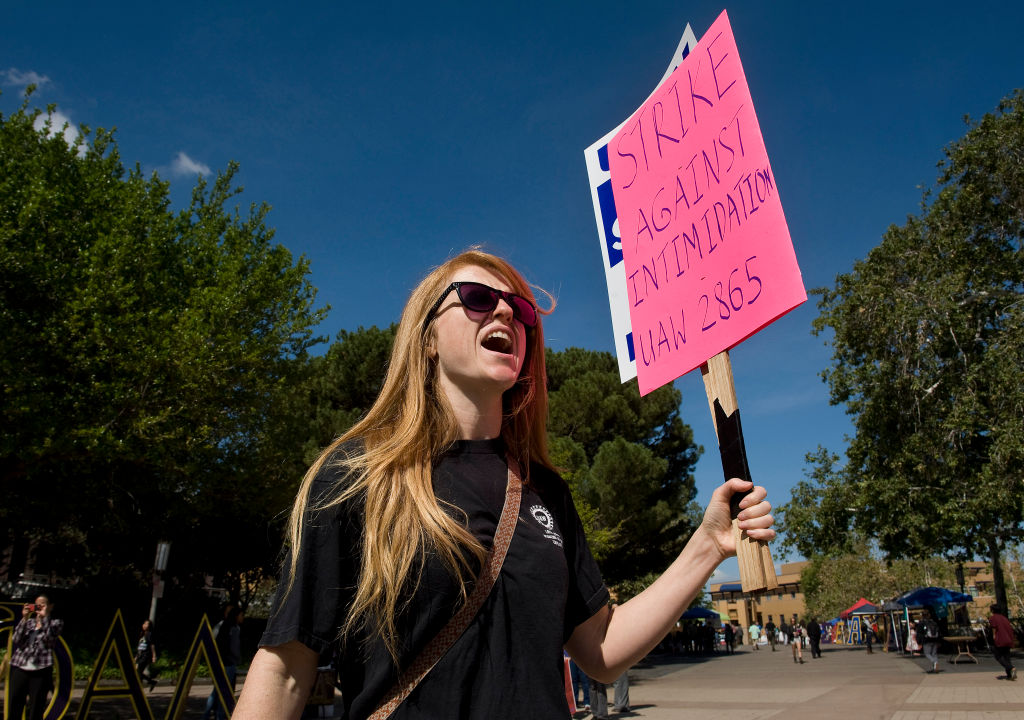
A graduate student chants slogans and marches during a protest. (Paul Bersebach / Digital First Media / Orange County Register via Getty Images)
The American university is in a state of crisis, and everybody knows it.
Students pay increasingly exorbitant tuition fees, relying on loans with usurious interest rates, for classes taught by increasingly stressed and underpaid adjuncts and graduate workers. According to a report by the Service Employees International Union’s Adjunct Action, an adjunct in Boston would need to teach seventeen to twenty-four courses a year simply to make ends meet. Meanwhile, graduate workers get by on small stipends while producing cutting-edge research and teaching courses, hoping this will lead to a tenure-track position. But these have become rare, with the majority of faculty now contingent.
Even the fortunate few grad students who do make it through the gauntlet onto the tenure track face serious challenges. On top of high expectations for research and teaching, they are burdened with significant service work on committees and in administration. This eats away at the time they might otherwise devote to both students and their own families — families often delayed, disrupted, or uprooted by the job search process. As for tenured faculty, many can only receive a raise via an “outside offer” from another institution, which can be difficult to obtain in the current job market.