What the Creator of Parks and Recreation and The Good Place Gets Wrong About Ethics
In his new book about moral philosophy, the TV creator of The Good Place, Michael Schur, reduces ethics to an individual skillset, thereby failing to properly reckon with the significance of collective human action and its ability to transform society.
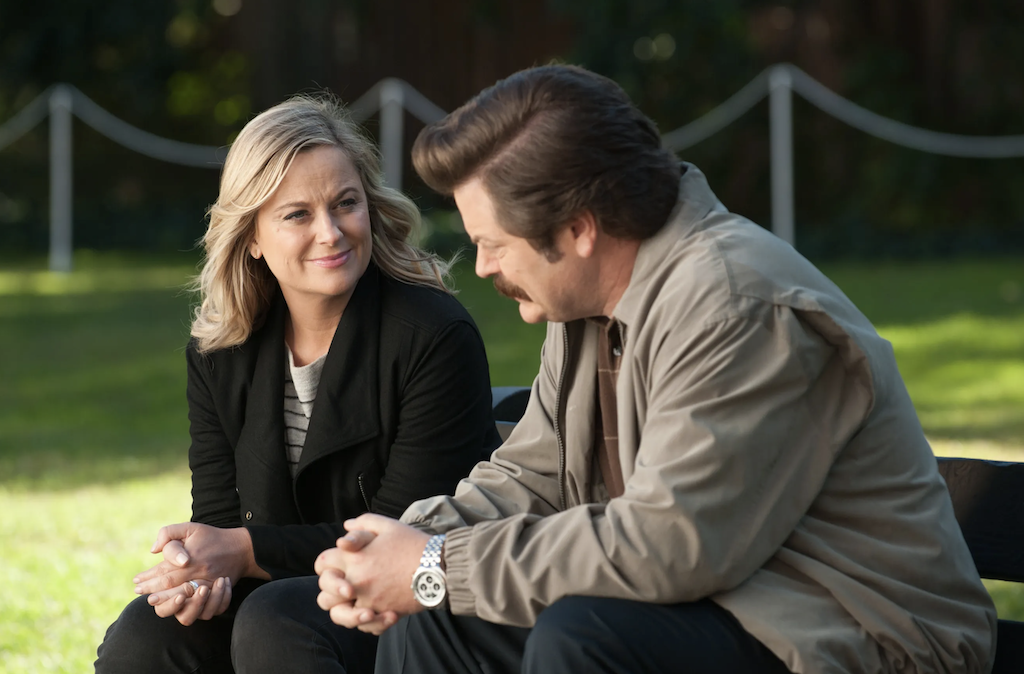
Still from Parks and Recreation. (NBC)
Michael Schur, the writer and producer who created Parks and Recreation and The Good Place, wants to help us out. The reading he did on ethics and moral philosophy that eventually led to the latter show imbued him with a strong conviction: that being good is very hard for most people. With that difficulty in mind, he set out to condense this material for his readers, who presumably are mostly also his show’s viewers, and to show them, in the words of his new book’s title, How to Be Perfect.
The premise seems simple enough: a basic orientation in ethics as discussed by philosophers, with the practical aim of giving people a tool kit that might help them think more clearly about what they do and why. But this project has serious problems, the most obvious of which is its strong aversion to sustained thinking of any kind. Yes, Schur is a comedy writer, but that doesn’t excuse the constant joking in the book, mostly because the “jokes” can be called such only under the most expansive formal definition of the term, but also because these pseudo-jokes ensure that no discussion of ideas goes on for too long, or assumes too urgent or serious a tone.
But more gravely, Schur sees the project of ethics as one of doing just enough to placate our conscience, and he does not bother to ask whether the ability to do this in the midst of a society built on extraction, dispossession, and murder might be a symptom of deep and lasting moral sickness.