Orbán’s Critics Dropped Their Principles — and Lost the Election
Hungary's election was always going to be an uphill battle in the face of incumbent Viktor Orbán's overweening power. But the opposition's lack of a clear alternative meant it ran simply as an anti-Orbán front — and it failed to mobilize voters.
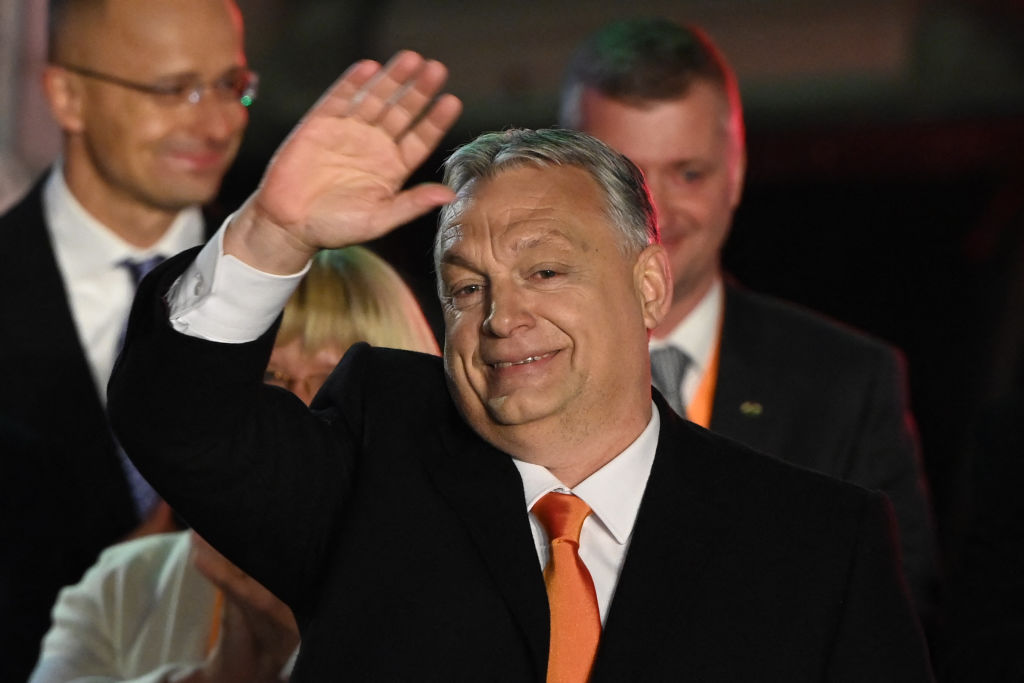
Hungarian prime minister Viktor Orbán and members of his Fidesz party celebrate the general election results. (ATTILA KISBENEDEK/AFP via Getty Images)
With a landslide victory on April 3, Hungary’s far-right premier Viktor Orbán has won another two-thirds supermajority and his fourth consecutive term. Seventy-six percent of the Hungarian parliament is now composed far-right assemblymembers, many with neo-Nazi and pro-Kremlin ties.
There are lessons to be learned from this catastrophic outcome. Orbán’s bid for staying in power was based broadly on claims of keeping Hungarians safe from the looming war in Eastern Europe and protecting them from EU austerity. Other than promoting “Western values” and hating Orbán, meanwhile, the opposition — the United for Hungary alliance, a coalition of six moderate opposition parties that intended to oust Orbán at all costs, led by conservative Péter Márki-Zay — struggled to offer a credible alternative to appeal to voters outside the cosmopolitan liberal bubbles of Budapest.
Mostly free elections still exist in Hungary, but the political playing field is unbalanced and rigged against opposition forces: Fidesz, the governing party, controls the majority of the media and spent eight times more on its reelection campaign than is legally allowed. These conditions alone, however, do not explain the united opposition’s failure. Instead, the abandonment of working-class values, the weeding-out of the radical left, and a staunch refusal to take a cautious position on the war are the factors that led to this embarrassing defeat.