Emmanuel Macron Is Polling Poorly Because He Has a Terrible Record
Ahead of the French presidential election, Emmanuel Macron’s poll lead has shrunk to almost zero. After years of battering France with unpopular reforms, even the call to rally against the far right is producing diminishing returns.
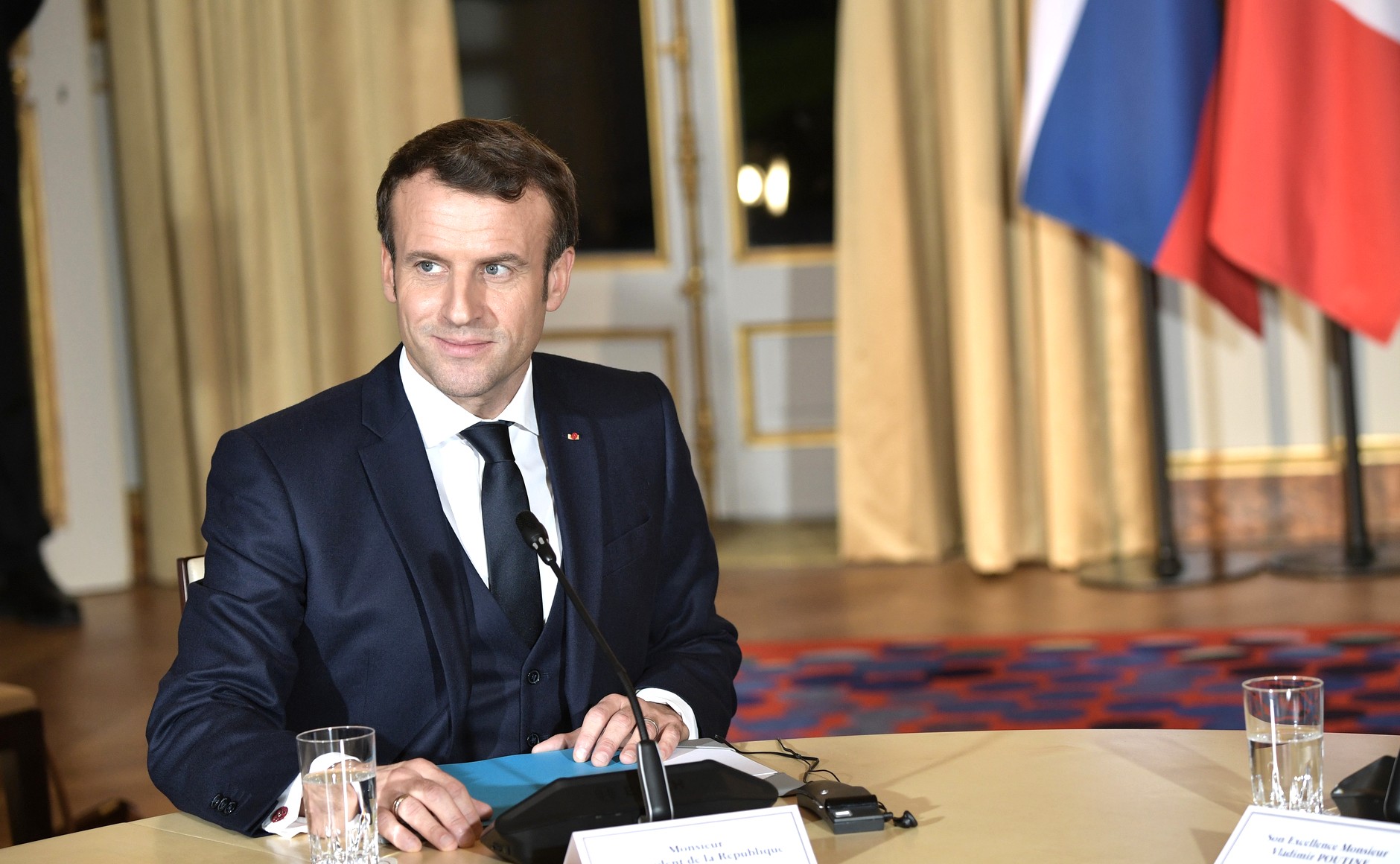
If we add to the foreign policy chessboard the domestic social crisis and the fragility of the French economy, French president Emmanuel Macron’s project is a fragile one. (Www.kremlin.ru / Wikimedia Commons)
If Emmanuel Macron weren’t the incumbent, it would be hard to consider him much of a candidate for president. In this campaign, he has been conspicuous by his absence. He has used his role at the top of France’s institutions to present himself as the guarantor of continuity and stability — an almost regal representation aimed at casting his reelection as a foregone conclusion. Macron was the last of the candidates to officially declare he was running, and he has missed no opportunity to place himself above the electoral fray, refusing to debate other candidates before the first round. His televised speeches were not counted against the maximum on-screen time for each candidate; for in his addresses to the nation about the pandemic, or the war, he spoke not as a mere hopeful but as president-monarch and commander in chief.
Yet this strategy also carries its own risks. First, there’s that of demobilizing his electorate, or even of putting it off by taking his reelection for granted. Then, there’s the scandal that has just broken around the multibillion-dollar invoices to the French state from the private consulting firm McKinsey, accused of hundreds of millions in tax evasion. The affair only confirms the existence of opaque relationships and trafficking of influence between the president’s office and top business and financial circles. Thus under pressure both from his opponents and from anxieties of his own, Macron has had to take the necessary countermeasures and begin to play his favorite card: the threat of Marine Le Pen winning. As in 2017, the ultimatum is: either me or the far right. Five years ago, it did work — but the solidity of Macron’s project soon proved illusory, and today he enjoys only the narrowest poll lead.
The night of Macron’s runoff win in 2017 did not see euphoria, like when François Mitterrand won for the Left in 1981, or relief, like with Jacques Chirac’s 2002 victory over Le Pen’s father. For it already somehow anticipated the sequel. On the night of the first round, Macron had convened his supporters before the Palais du Louvre, a square populated by old right-wing voters and young cadres of Orleanists, dynamic and affluent Paris — the avatars of what he called the “start-up nation.” There was a tepid atmosphere and a concert (the sound stopped working at one point), and things broke up shortly after the announcement of results promising a Macron–Le Pen runoff.