Emmanuel Macron’s France Is Authoritarian Because It’s Run Like a Business
Upon becoming president, Emmanuel Macron promised to make France into a “start-up nation.” But imitating workplace hierarchies has made his government deeply authoritarian — subjecting democratic institutions to the tyranny of the boss.
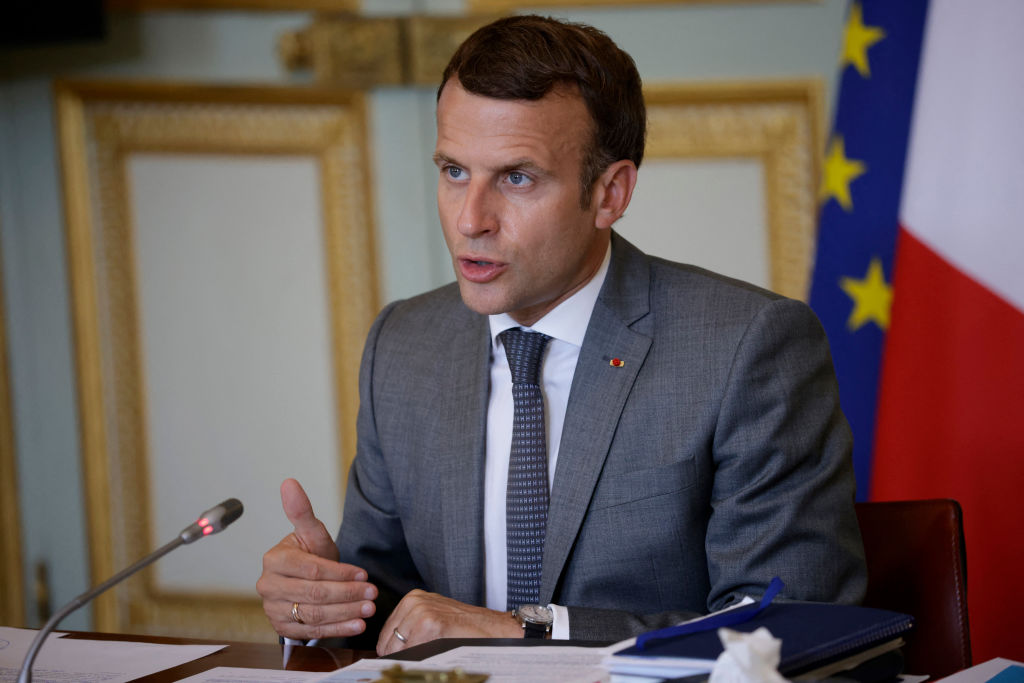
French president Emmanuel Macron at the Elysee Palace in Paris, France, on July 19, 2021. (Yoan Valat / POOL / AFP via Getty Images)
Elected to the presidency in May 2017, Emmanuel Macron promised to turn France into a “start-up nation.” Helped by his youth and his “techy” profile — as shown by his cool demeanor upon opening Paris’s Station F startup hub in July that year — Macron expressed bold ambitions for the future of the French economy. He promised to attract talent by making it easier to get a visa and raise capital, as well as simplifying bureaucratic procedures and strengthening Europe-wide business ties.
But soon enough, Macron’s project went beyond creating an “ecosystem” of start-ups, and revealed an underlying philosophy of government, widely criticized and even mocked for its blatant arrogance. This was the Macron who spoke of the “nobodies you come across in the Gare du Nord” — the president who advised a T-shirt-wearing unemployed man that he ought to “work to afford a suit,” and said that the jobless needed to “cross the street” to find employment.
These comments expressed a certain state of mind — an “ethos,” us sociologists would say — indicative of the intellectual schemas that govern this “start-up nation.” Here, the divisions that pervade society are justified by the different levels of effort we each put in and, especially, the genius of “those who make it there first.”