Workers Have Been Fighting Automation Ever Since Capitalism Began
Automation didn’t start in the age of robots and microchips. In the late 19th century, employers used machinery to break the power of skilled glass workers, and helped launch firms like Coca-Cola on a path to global domination.
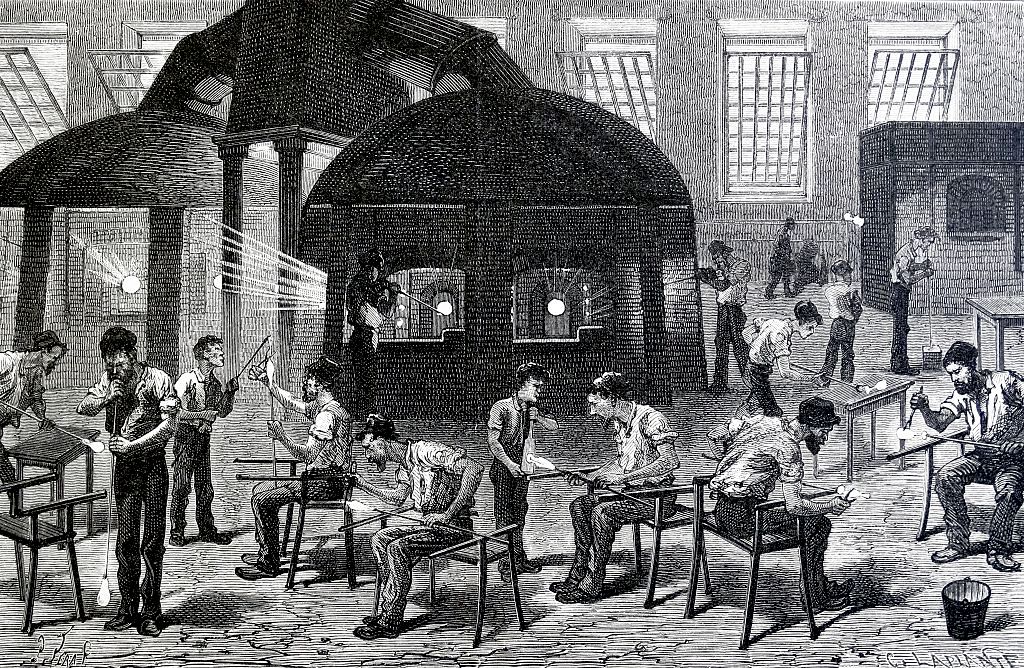
Men engaged in the various stages of making glass bottles in London, 1888. (Universal History Archive / Universal Images Group via Getty Images)
The history of capitalism is one of constant revolution in the way goods are produced, transported, and sold. Every turn of the wheel has dramatic implications for workers who may find their bargaining power and livelihoods dissolving virtually overnight. The shift away from coal as an energy source left mining communities high and dry; the use of standardized shipping containers helped employers to break the strength of dockers’ unions.
It’s hard now to imagine a world without cheap, mass-produced glass bottles. Anyone who visits a supermarket or a grocery store will see shelves groaning with them. But the story of how they came to be so ubiquitous and unremarkable is also a story of how capitalists use new technology to gain control over their workers. At a time when the shadow of automation hangs over so many workers, this is a very modern tale.
Artisans and Industry
Before plastic was an option, before Tetra Paks and pop-top cans, one of the best ways to store liquid was in glass bottles. Since antiquity, people had used them to preserve olive oil and wine. In nineteenth-century America, glass bottles were a choice container for commercial writing ink, shoe polish, and whiskey.