“Lunch Ladies” Are Tired of Being Underpaid and Overlooked
Cafeteria staff make learning and healthy development possible by providing balanced meals to kids who otherwise might not get them. In return, they bring home some of the lowest earnings of the generally underpaid K–12 workforce.
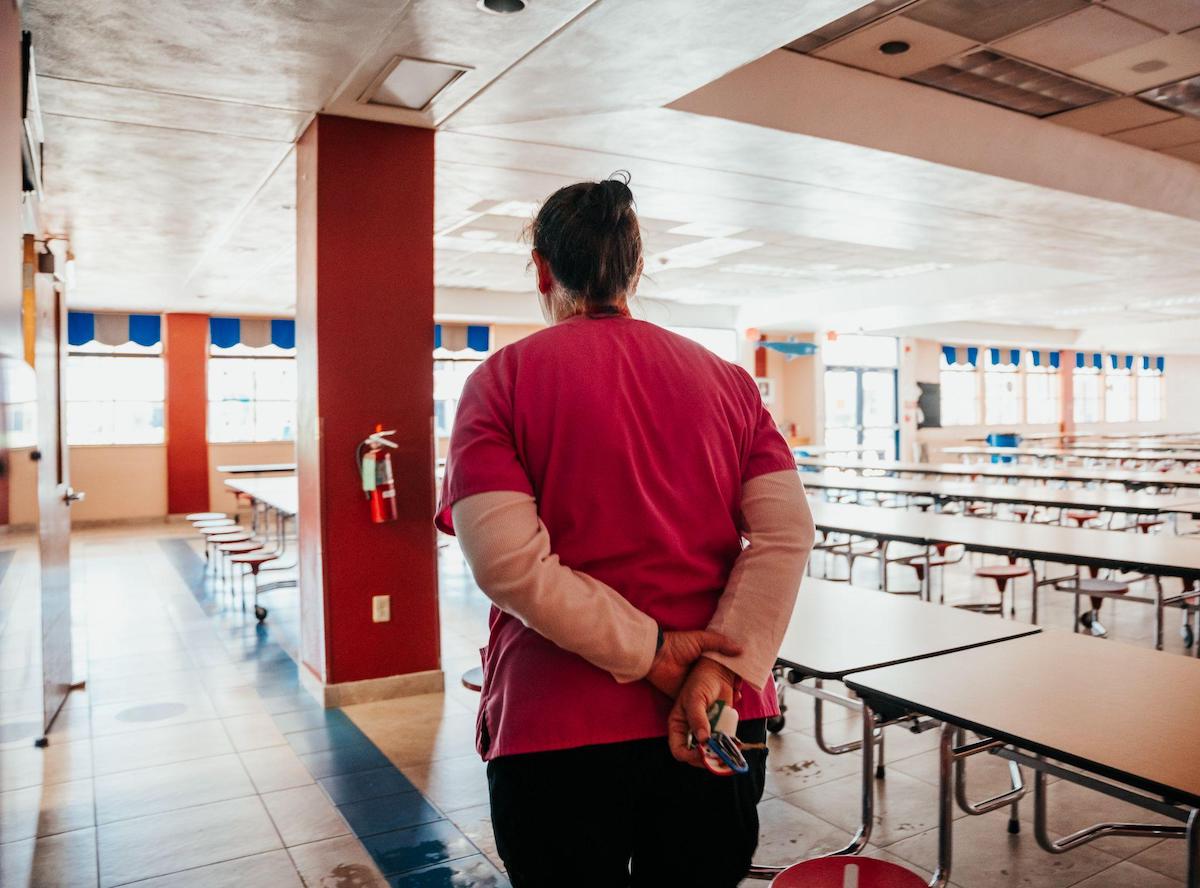
Mary Dotsey, a food service specialist in Indian River County School District in Florida, surveys her school’s empty cafeteria. (Armand Aviram)
“Lunch lady code” dictates that you feed hungry kids regardless of the circumstances. Heather Hillenbrand, a public school cafeteria worker and union leader in Akron, Ohio, explained this to Jacobin, noting that she and her coworkers find ways to feed students seconds, even when bureaucracy, supply chain issues, staffing shortages, and the school administration are working against them.
Mary Dotsey, a food service specialist in Indian River County School District in Florida, described processing the lunch numbers of children who she knows brought packed food so her program can claim USDA reimbursement for feeding needy children two meals. “I just really care more about the kids than I do about the politics of worrying about pennies and dimes and rolls and pieces of pizza and milk.”
Contrary to the movie trope of the ornery lunch lady, cafeteria workers tend to be profoundly caring people with a passion for feeding and nurturing students. Hillenbrand told Jacobin that many kids in her district “desperately need” the food she prepares, since “school to them isn’t just where you learn — it’s where you get your basic needs met.”