In Alaa Abd el-Fattah’s Prison Writings, the Flame of Egypt’s Revolution Still Burns
Alaa Abd el-Fattah is a leading Egyptian dissident, today held in a maximum security jail in Cairo. His prison writings express the living thought of the Egyptian revolution, defying the Sisi government’s attempt to extinguish it.
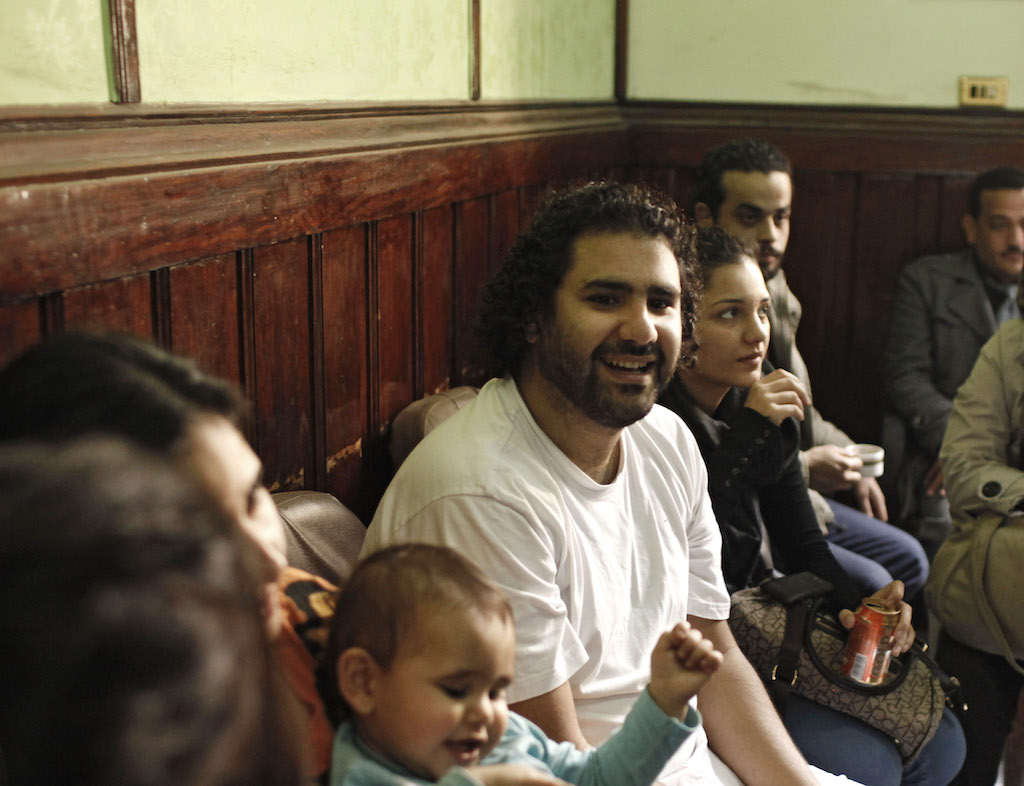
Alaa Abd el-Fattah sits with his family and supporters in a waiting room at Cairo’s High Court prior to a hearing on March 26, 2013 in Cairo, Egypt. (Ed Giles / Getty Images)
In an early chapter of his notebooks, mostly written in prison, Egyptian dissident and writer Alaa Abd el-Fattah tells of how he used his country’s brief window of democracy following the 2011 revolution. After the Muslim Brotherhood won elections in 2012 and eased the blockade of Gaza, he visited this Palestinian territory, crossing a border that would soon be resealed, as it remains today.
There, invoking a common description of Gaza as a sort of open-air prison, he writes — with typical care neither to romanticize nor trivialize — that in life, it is prisoners who best understand freedom. Only because this sentiment flows from Alaa’s own pen does it seem acceptable to suggest that even from a jail cell in Egypt, he has a freedom of mind that many in the West do not possess even outside of one.
The Canadian writer Naomi Klein writes a foreword to a new US edition of You Have Not Yet Been Defeated in which she makes the assertion — hard to contest — that in this book you are reading living history. Klein also touches upon the point that perhaps the most important word in the book is the first one — the opening to its superb, vital title: You.