When Musicians Went on Strike — and Won
Eighty years ago, thousands of musicians in the US launched a two-year strike against the recording industry. They won landmark gains — reminding musicians today that the best way to wrest back money from the streaming companies is to flex collective power.
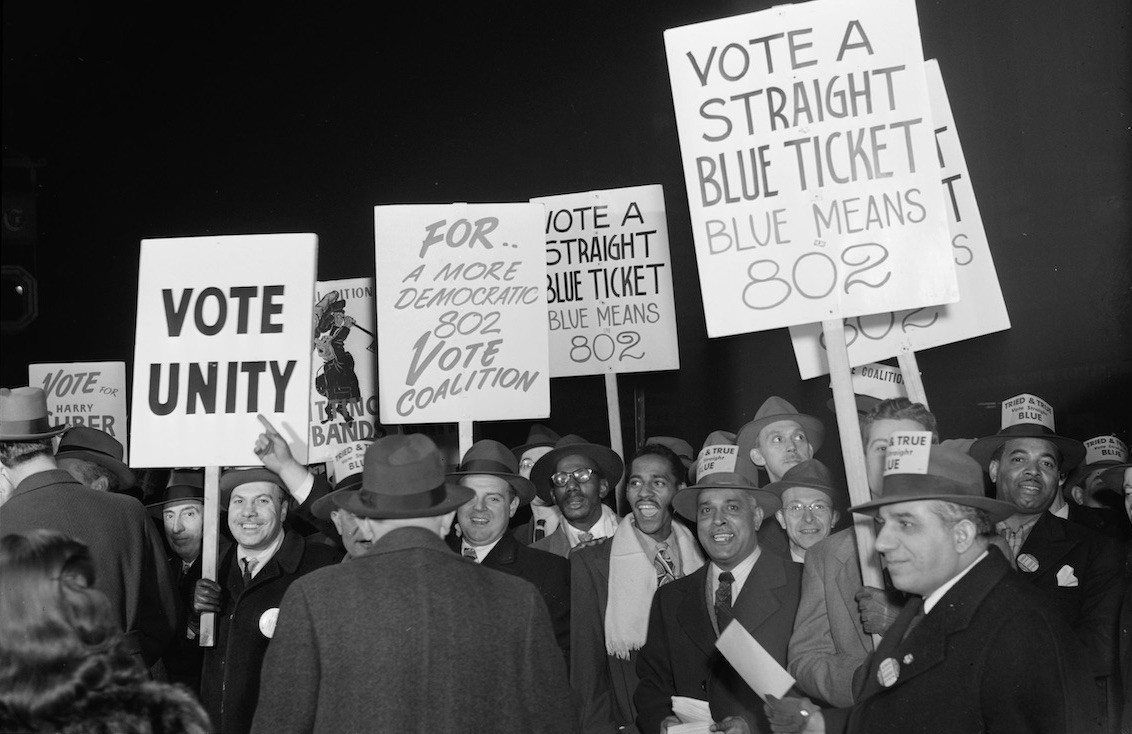
American Federation of Musicians members on the streets of New York, c. 1947. (William P. Gottlieb / Library of Congress)
This year marks the eightieth anniversary of the American Federation of Musicians’ 1942–44 strike against the recording industry. Demanding a bigger cut of the profits created by new recording technologies, the AFM’s roughly 136,000 members refused to produce any recordings for two full years. And they won.
Following the “recording ban,” as the strike is commonly known, the AFM secured contracts with over six hundred record labels that required each company to cough up a royalty fee for every record sold. The royalty fund was then used to pay musicians across the United States and Canada to perform free public concerts. For decades, the union-controlled fund was the largest employer of musicians in the country.
As musicians today contemplate how to demand more money from streaming services that pay just one-third of a cent per stream, the AFM’s successful strike offers key lessons about how to win a better deal for labor. After all, this radical change did not emerge from the actions of a few isolated celebrities, nor a disorganized consumer boycott, nor a tech utopian cure-all, but rather the flexing of strike power by an organized mass of music workers.