Musicians Can and Should Organize to Improve Their Pay and Working Conditions
The music industry is making money hand over fist, but life for average musicians remains incredibly precarious. But musicians aren’t temporarily embarrassed millionaires — they’re workers. And like any other worker, the solution to their problem is collective organizing.
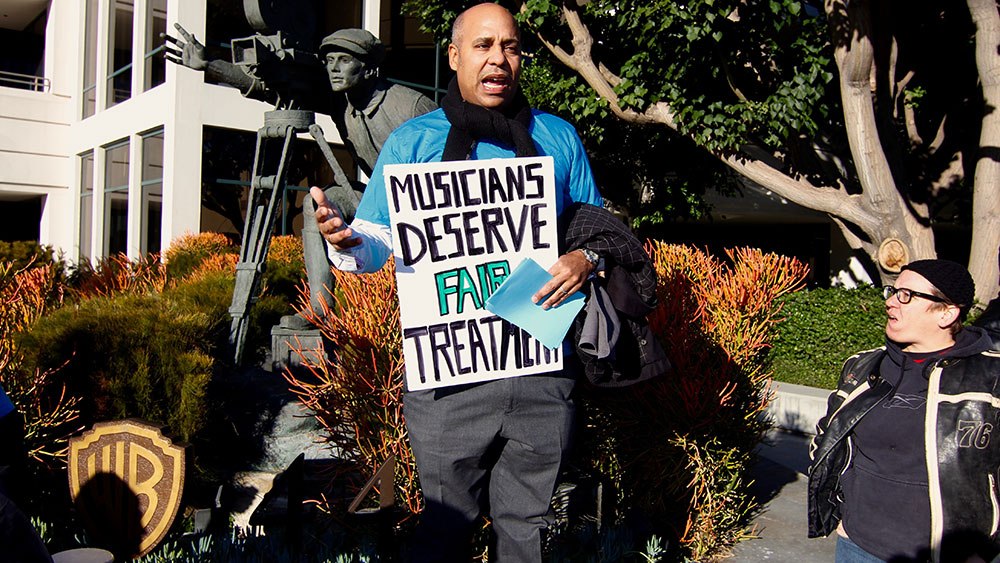
Courtesy AFM Local 47
The music business is making more money than ever. A 2019 Goldman Sachs report estimated the industry could top more than $41 billion annually by 2030, as compared with $25 billion per year in the 1990s. But, as in the larger economy, that money is only going to those on top, to executives and their few dozen chosen stars. Working musicians have seen stagnant or declining wages and power for decades, exacerbated by already paltry public funding further drying up.
Artists have largely accepted this grinding inequality as an inevitability of the music industry’s tough but fair meritocracy. To adapt John Steinbeck’s observation, musicians see themselves not as an exploited proletariat, but as temporarily embarrassed pop stars. Each musician is taught they will make it big with their unique combination of hustle and talent; a united movement to fight for their collective interests is nowhere on their radar. The result is a vast pool of cultural workers battling one another for increasingly small resources as the top earners rake in unprecedented profits.
While the current landscape seems grim, musicians do have a proud history of collective action. The American Federation of Musicians (AFM) led successful strikes for royalties in the 1940s, and it continues to play an essential role to protect certain sectors of musicians. Artists have repeatedly united as part of solidarity movements, such as against South African apartheid.