The Processor Chip Industry Is Another Ugly Capitalist Oligopoly
Processing chips have become central to our lives, running smartphones and TVs alike. But disruptions in the chip industry are driving up inflation — and exposing the industry for the ugly capitalist oligopoly that it is.
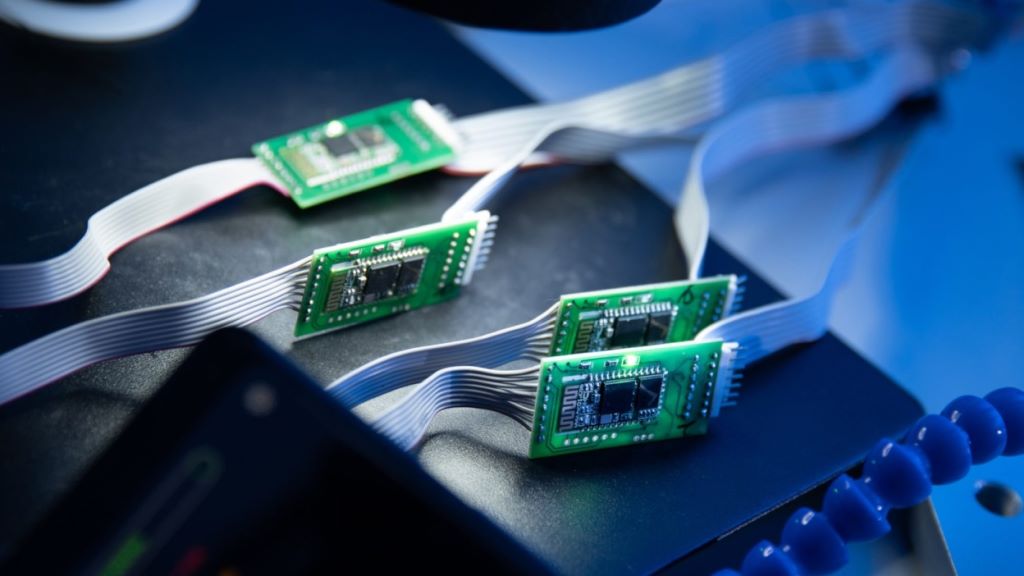
The companies hired to make the chips in their fabrication facilities are incredibly few in number, with just one making nearly all the fanciest microprocessor chips: the Taiwan Semiconductor Manufacturing Company. (Jacobs School of Engineering, University of California, San Diego)
When Intel announced plans to build a new $20 billion semiconductor plant in Ohio last month, President Joe Biden hailed it as a step toward reducing the United States’ dependence on imports for the complex chips that run our phones, TVs, and cars. Pandemic-related disruptions in chip manufacturing have fueled inflation — a shortage of even the relatively simple legacy chips used in car and truck manufacturing has forced plants to close down, in turn driving up the prices of used cars a whopping 37 percent in 2021.
The Intel plant, however, would not start production until 2025. So, in the meantime, why is there such a dearth of silicon chips? Is it simply COVID-19 factory shutdowns, or something more?
Fabsolute Advantage
Name-brand US chip companies like Intel, Nvidia, and Advanced Micro Devices (AMD) conduct research for and design the chips that most US consumers ultimately use. But the actual production of computer chips has been outsourced overseas, with the United States producing just 12 percent of chips globally — down from 37 percent in 1990. The companies hired to make the chips in their fabrication (“fab”) facilities are incredibly few in number, with just one making nearly all the fanciest microprocessor chips: the Taiwan Semiconductor Manufacturing Company (TSMC).