Smedley Butler Helped Build American Empire. Then He Turned Against It.
Smedley Butler was born to privilege and power, becoming a powerful general in the most powerful military in the world. But he realized he was playing a key role in an evil system, US imperialism — and used his privilege and power to speak out against it.
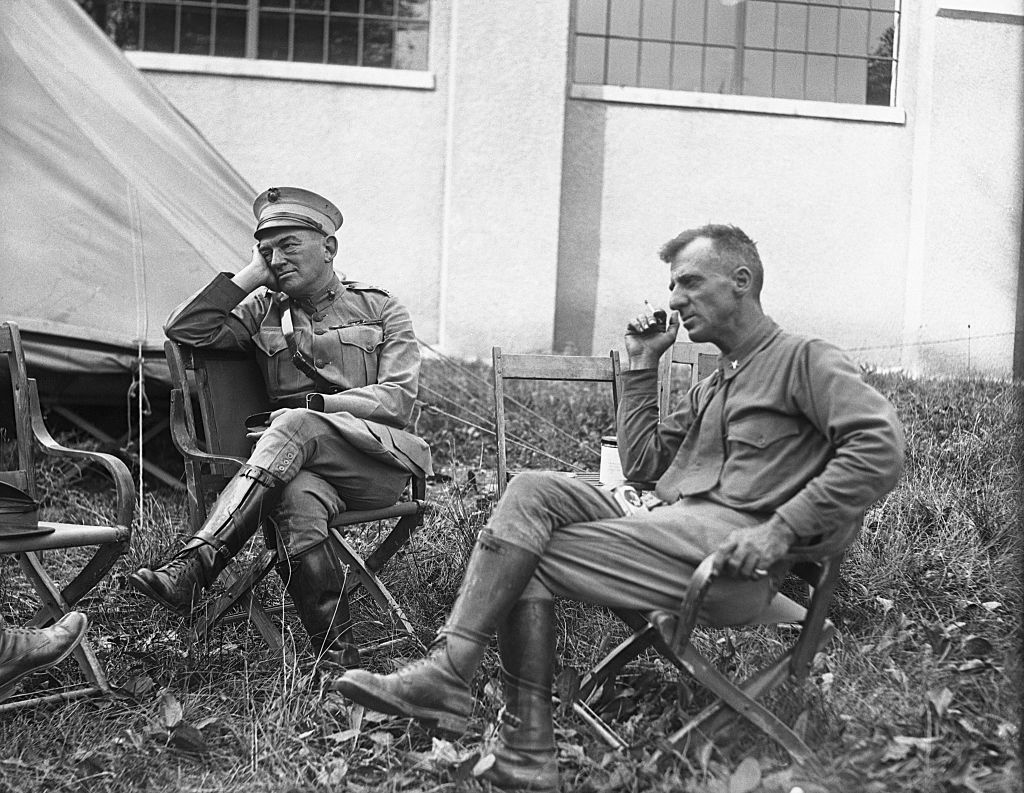
Major General John A. Lejeune, head of the Marine Corps, calls on General Smedley Butler in camp at Frederick, Maryland in 1922. (Bettmann / Getty Images)
Born into a family of congressmen and millionaires in 1881, Smedley Butler was destined to succeed in the career of his choice while promoting the interests of his class. And that’s what he did, at first.
After matriculating in elite schools, Butler enlisted in the Marines as a second lieutenant at the age of seventeen. The trajectory of his life as a soldier traced the arc of US imperial expansion in the early twentieth century, from Cuba to the Philippines to Nicaragua to Haiti to Shanghai, with many stops in between. Along the way, he attained a kind of public glory few soldiers even dream of. Butler was the youngest major general in Marine Corps history, and at the time of his death, he was the most decorated Marine who had ever lived.
But accolades were not enough to ease his troubled conscience. As the fearsome roar of the early century faded into the unease of the Great Depression, Butler exchanged his military garb for a civilian suit and jacket, leaving the Marine Corps behind to pursue a new vocation as the most prominent antiwar orator in America.