When Public Transit Workers Ground New York City to a Halt
In 1966, New York City public transit workers went on strike for a better contract, paralyzing the life of the city. The strike showed that New York couldn’t function without their labor and forced reluctant bosses to concede to their demands.
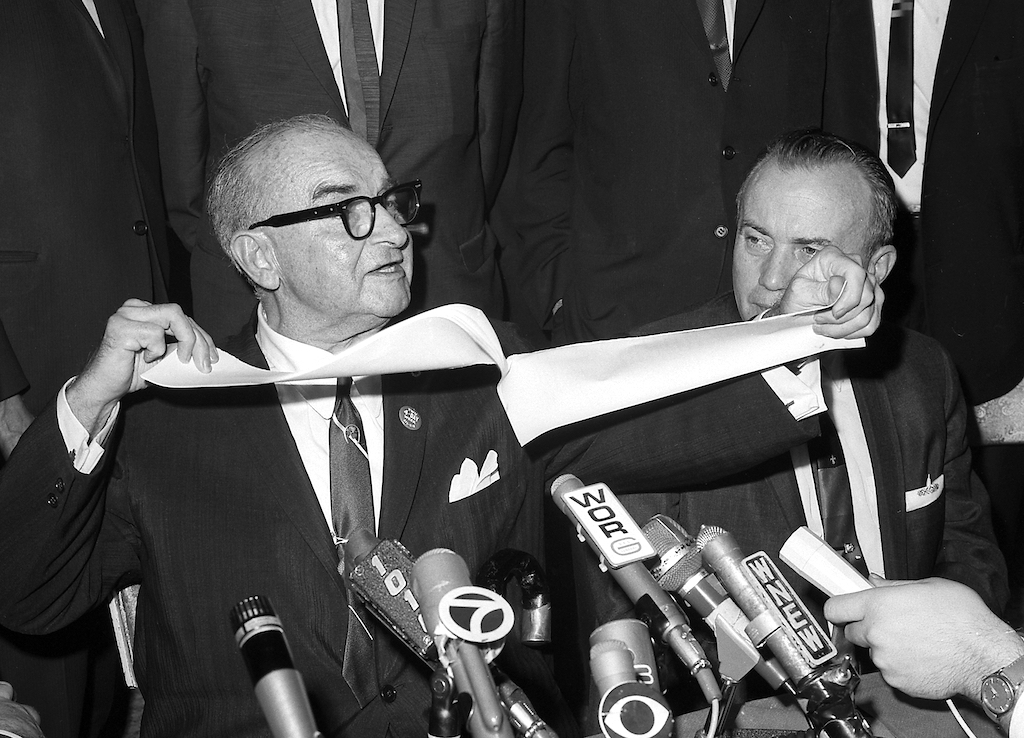
At a press conference TWU president Michael Quill tears up a temporary strike-barring injunction issued by State Supreme Court Justice George Tilzer. Quill said: “The strike is on.” (Paul DeMaria / New York Daily News via Getty Images)
On November 2, 1965, John Lindsay was elected the new Republican mayor of New York City. The next day, Mayor-elect Lindsay received a deceitfully courteous telegram from Michael J. Quill, the fiery, militant leader of the Transport Workers Union (TWU) Local 100.
Along with his “sincere congratulations,” Quill attached seventy-six contract demands his union was planning to submit to the New York Transit Authority. It was the first shot in a battle that would eventually grind the city to a halt for twelve days.
TWU Local 100’s demands were ambitious: a four-day work week, a 30 percent wage increase over three years, increased pensions, and six weeks of vacation after a year on the job. When the union sent its demands to the Transit Authority, Chairman Joseph O’Grady was outraged, telling reporters, “There isn’t enough gold in Fort Knox to pay this bill.”