We Need a Green New Deal for Public Transit
Expanded, free public transit, funded by taxes on the rich, can be at the heart of a just transition to a green economy.
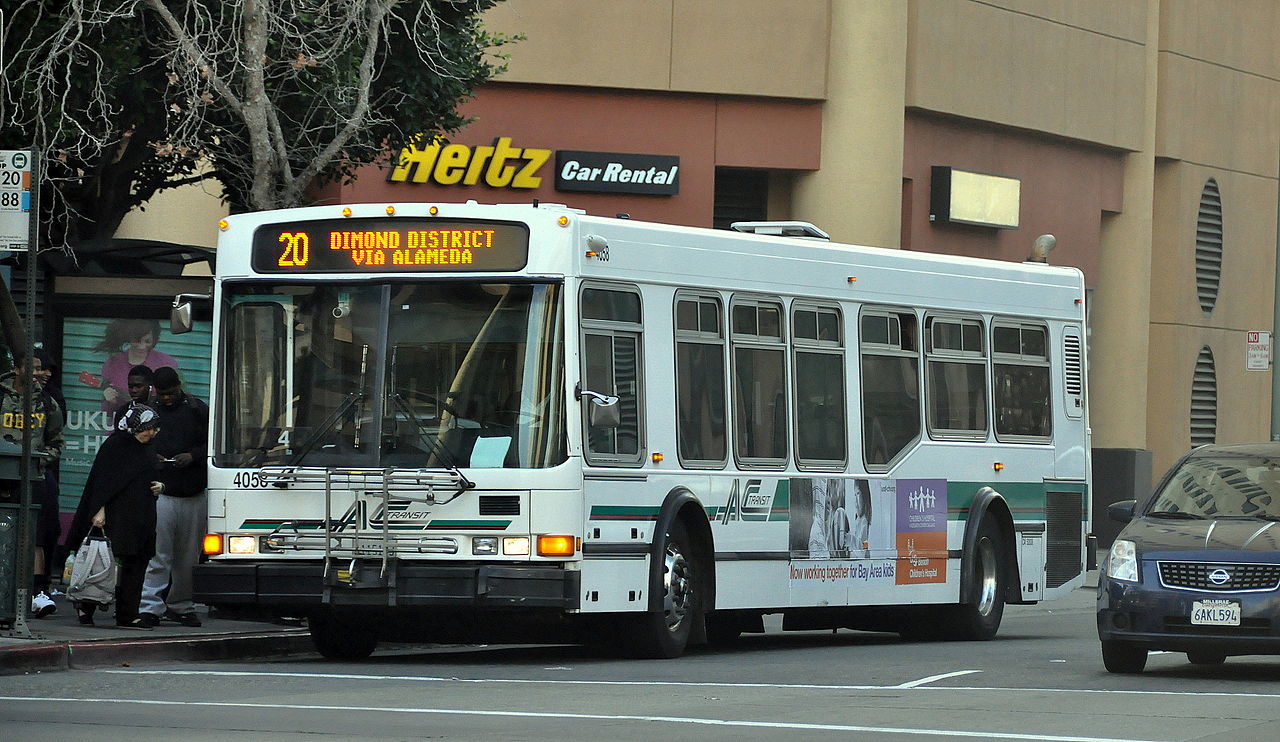
An AC Transit bus in Downtown Oakland, California, in 2013. Wikimedia Commons
It’s easy to take our public transportation systems for granted. But the working class, especially its most vulnerable members, rely on public transit to get around.
This is especially true in California’s East Bay, where I live. AC Transit is the public bus system serving Alameda and Contra Costa counties, which includes the cities of Oakland, Berkeley, and my own city of Richmond. AC Transit primarily serves lower-income working people and people of color. A recent survey found that 65 percent of its riders come from households that make under $50,000. One-third of its riders identify as black or African American, about 20 percent identify as Latino or Hispanic, and 18 percent identify as Asian.
The public bus service has also been a major source of good union jobs for working-class people of color. Amalgamated Transit Union (ATU) Local 192, representing AC Transit drivers and mechanics, has an 80 percent black membership.