“We Are Fighting for Our Lives Against People With Money and Power”
Minneapolis bus drivers provided a model of solidarity during the George Floyd protests by refusing to transport police officers. We spoke with the president of the bus driver union’s black caucus about the inspiring action and the need for a labor movement that fights for more than just bread-and-butter economic gains for its members.
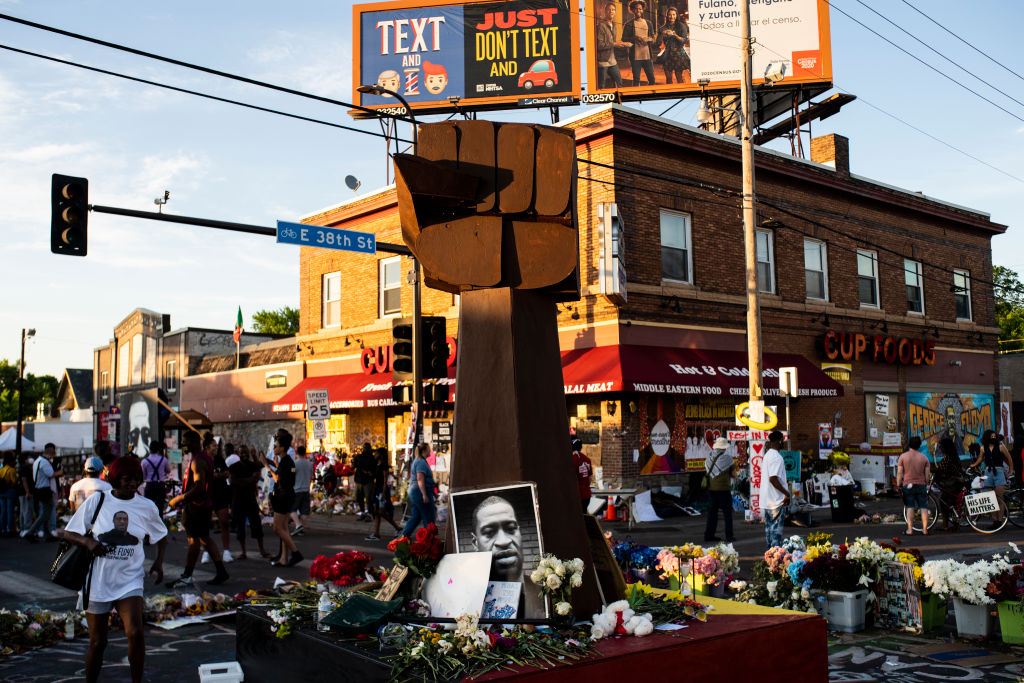
A sculpture of a raised fist stands in a memorial for George Floyd outside Cup Foods on June 7, 2020 in Minneapolis, Minnesota. Stephen Maturen / Getty
Since the video was released of Officer Derek Chauvin pressing his knee on the neck of George Floyd for almost nine minutes as Floyd said his last words, “I can’t breathe,” protests have exploded in eighteen countries and all fifty states. The cry of Black Lives Matter can be heard in small towns and big cities throughout the United States.
The question is, will organized labor recognize their collective power and step up in this moment to propel the movement forward? In Minneapolis, bus drivers organized under the Amalgamated Transit Union (ATU) Local 1005 provide an example of what that looks like. After protests erupted, they refused to transport police officers and instead made it clear that they stood with the broader working class.
Bianca Cunningham, an organizer and staff writer at Labor Notes, recently sat down with Doni Jones, bus driver and president of the black caucus of the ATU’s Minneapolis local, to discuss policing and how to bridge the gap between Black Lives Matter and the labor movement.