Union Membership Is Still Declining
Unions raise wages and benefits and increase job security. So, the fact that unionization rates are still in decline, despite some recent bright spots in worker militancy, is very bad news.
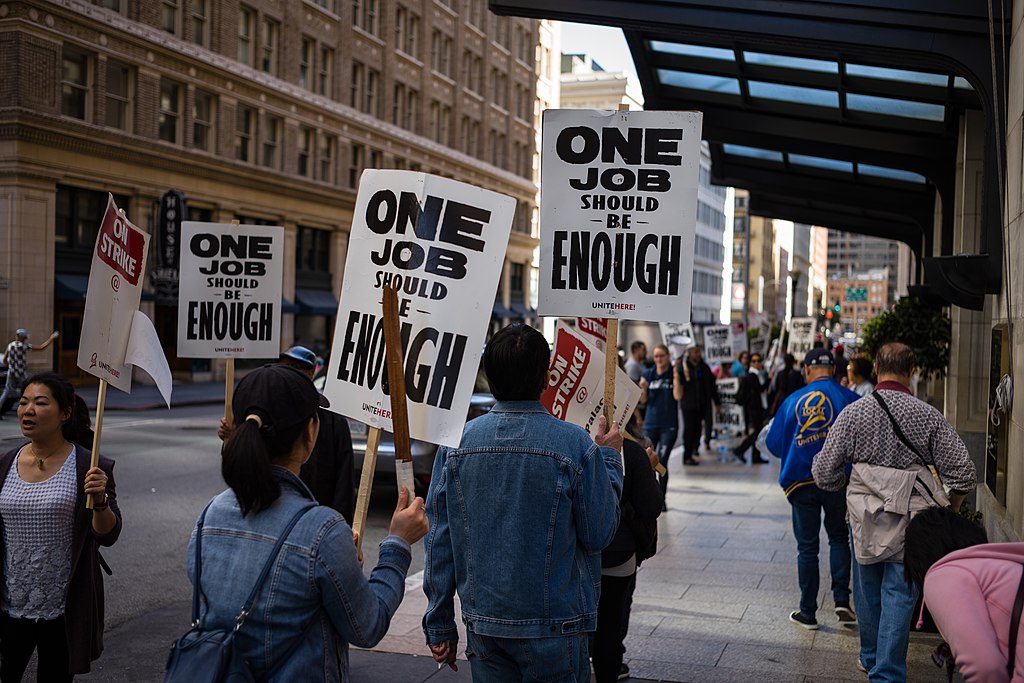
Workers of the Palace Hotel, part of Marriott Hotels, on strike in October 2018 in San Francisco, California. (Bastian Greshake Tzovaras / Flickr)
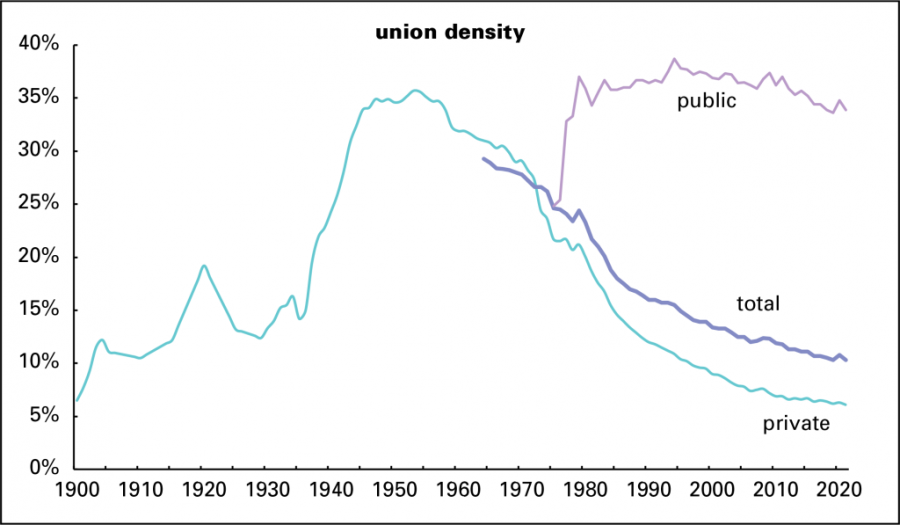
Union membership fell by almost 2 percent in 2021 as employment rose by over 3 percent. That took union density — the share of the workforce belonging to unions — down from 10.8 percent in 2020 to 10.3 percent last year, where it was in 2019. Density rose in 2020 because more nonunion workers lost their jobs in the COVID crisis than their unionized counterparts, but 2021’s return to employment undid that.
For the private sector, just 6.1 percent of workers were unionized last year, down from 6.3 percent in 2020, an all-time low for a series that goes back to 1900. (Official numbers from the Bureau of Labor Statistics began in 1983; I’ve assembled figures for earlier years from various sources.) Public sector density also fell, from 34.8 percent to 33.9 percent, not quite a record low. But the number of government workers organized in unions fell by 2.7 percent, almost four times as much as private sector members. The full history is graphed below.