Joseph Schumpeter and the Economics of Imperialism
The Austrian economist Joseph Schumpeter believed that the triumph of socialism was inevitable, but he rejected the Marxist view of how capitalism works. His ideas are a stimulating challenge for those seeking an alternative to capitalism today.
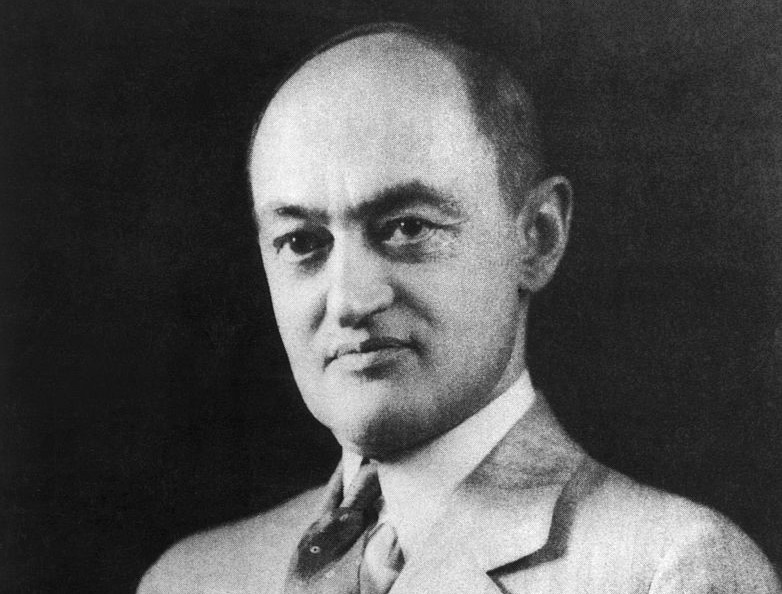
Joseph Alois Schumpeter (1883–1950) is best known today as an historian of economic thought. (Getty Images)
Joseph Alois Schumpeter was one of the most prominent political economists during the first half of the twentieth century. He published prolifically in both German and English on questions of economic theory, economic sociology, economic and social policy, and the history of ideas. A phrase Schumpeter coined to describe the essence of capitalism as he understood it, “creative destruction,” has become one of the most familiar terms in the economic lexicon.
In politics, Schumpeter was a liberal conservative — or perhaps a conservative liberal — but he was also deeply influenced by his Marxian contemporaries. As a student at the University of Vienna, Schumpeter was a member of Eugen von Böhm-Bawerk’s legendary graduate seminar, along with three leading Austro-Marxists — Rudolf Hilferding, Otto Bauer, and Emil Lederer — and the free-market liberal Ludwig von Mises.
This experience no doubt encouraged Schumpeter to explore many of the same questions that his Marxist contemporaries had posed, although the answers that he formulated differed sharply from theirs. He disagreed with the Marxist view of capitalism’s inner contradictions while believing that the ultimate victory of socialism was inevitable anyway. For Schumpeter, the drive toward imperialism and war that was so evident in his own time stemmed from precapitalist social forces that were still at work in European society rather than the logic of capitalism itself.