Maine’s Democratic Governor Just Ran Roughshod Over the Rights of Workers
Farmworkers are among the most exploited workers in the country, and a bill in solid-blue Maine would have finally given them basic labor rights. But the state's Democratic governor just vetoed the bill.
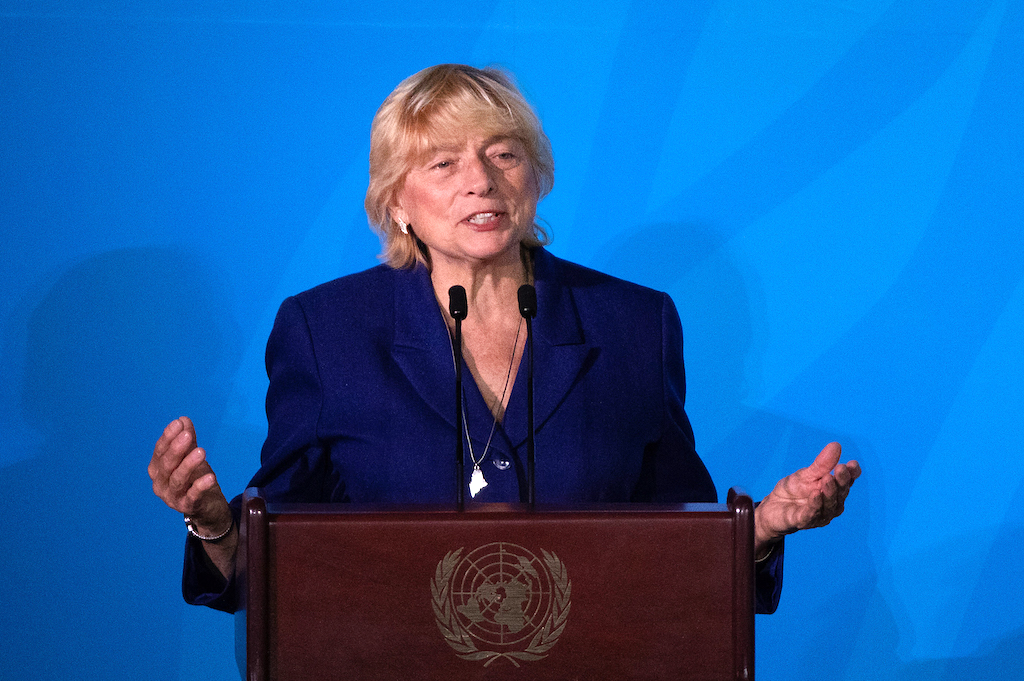
Janet Mills speaking in New York, 2019. (Kevin Hagen / Bloomberg via Getty Images)
During the New Deal era, Congress passed two still well-known pieces of labor legislation: the National Labor Relations Act of 1935 and the Fair Labor Standards Act of 1938. Both played a significant role in establishing basic labor protections and empowering ordinary workers — the former notably enshrining the right to join and participate in a union. Not everyone, however, was included. Carve outs for both domestic and farmworkers aided the continued exploitation of two sectors that have remained particularly vulnerable to this day. Blacks were particularly overrepresented within those two groups.
It was exactly this injustice that a recent bill in Maine’s state legislature hoped to address. Several types of agriculture are significant to the local economy, which yields a large output of eggs, potatoes, blueberries, and maple syrup, though people employed across the industry have lacked even basic rights for decades. In introducing the legislation, Democratic representative Thom Harnett noted that farmworkers aren’t even considered employees under state law:
Historically, agricultural workers, or “farm workers”, have been specifically excluded from basic labor laws that protect most workers. Currently, in 2021, Maine farm workers are still not considered “employees” under state law. By way of example, they are not covered by Maine’s laws regarding minimum wage and overtime. This is a basic protection afforded almost every working person in Maine and is particularly important and meaningful to working people who find themselves on the low end of the wage scale. What is even more remarkable is that farm workers are considered essential employees by both the state and federal government yet are not even considered as employees under Maine’s labor laws.