To Beat the Right, We Have to Understand Their Arguments
Since the French Revolution, the Right has deployed a common set of arguments to resist the drive to democratize economic and political power. The Left will only win if we analyze their rhetoric — and counter it.
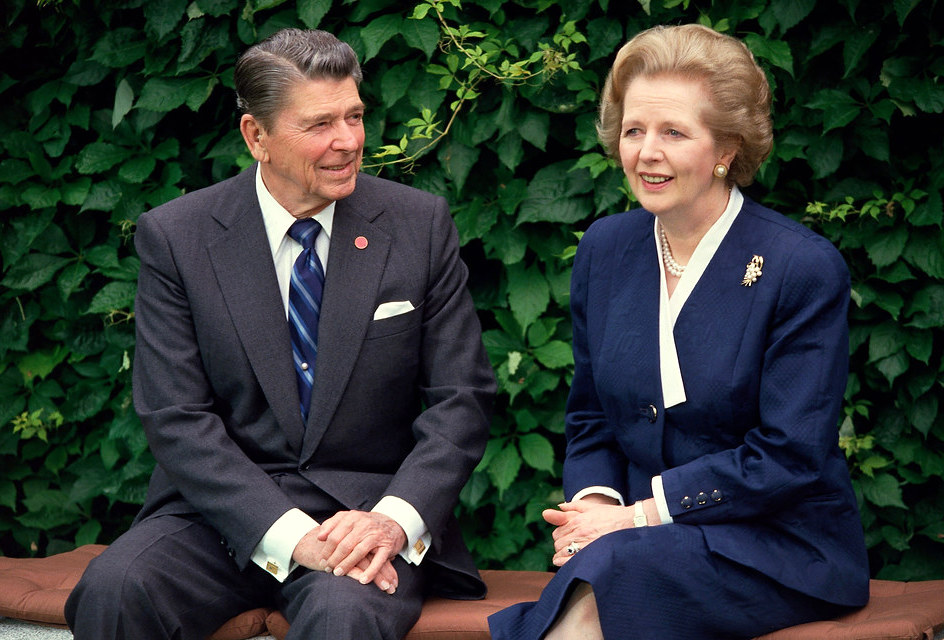
Ronald Reagan meets with Margaret Thatcher during an economic summit meeting in Venice, Italy, 1987. (Levan Ramishvili / Flickr)
In 1991, a decade after the Reagan-Thatcher revolution pushed politics decisively to the right, the economist and social scientist Albert O. Hirschman published a slim volume called The Rhetoric of Reaction. The book laid out a typology of right-wing arguments — the “major polemical postures and maneuvers likely to be engaged in by those who set out to debunk and overturn ‘progressive’ politics.”
Hirschman stressed that conservative thought was more than a series of tropes. Right-wing polemicists sometimes hit their mark. But in the grand sweep of conservative politics, there are certain argumentative strategies that pop up again and again. And by recognizing those rhetorical patterns, it becomes easier to rebut right-wing arguments no matter what guise they take.
Three Waves of Progress, Three Waves of Reaction
Albert O. Hirschman was born in 1915 in Berlin, Germany. After fighting against the Francoists in the Spanish Civil War, he worked with the Emergency Rescue Committee to help prominent anti-fascists flee Nazi persecution during World War II. He eventually escaped to the United States, where he worked for the army through the rest of the war and assumed a fellowship at the University of California, Berkeley. He would go on to hold a variety of academic appointments until his death in 2012. While never a radical, Hirschman was sharply critical of the rising tide of conservatism in the 1980s and produced The Rhetoric of Reaction as a response.