Coronavirus Has Exposed America’s Digital Divide
Coronavirus is pushing us from our workplaces, classrooms, and public spaces into our homes. High-speed internet is more essential than ever to maintain social ties. But millions are denied this fundamental right.
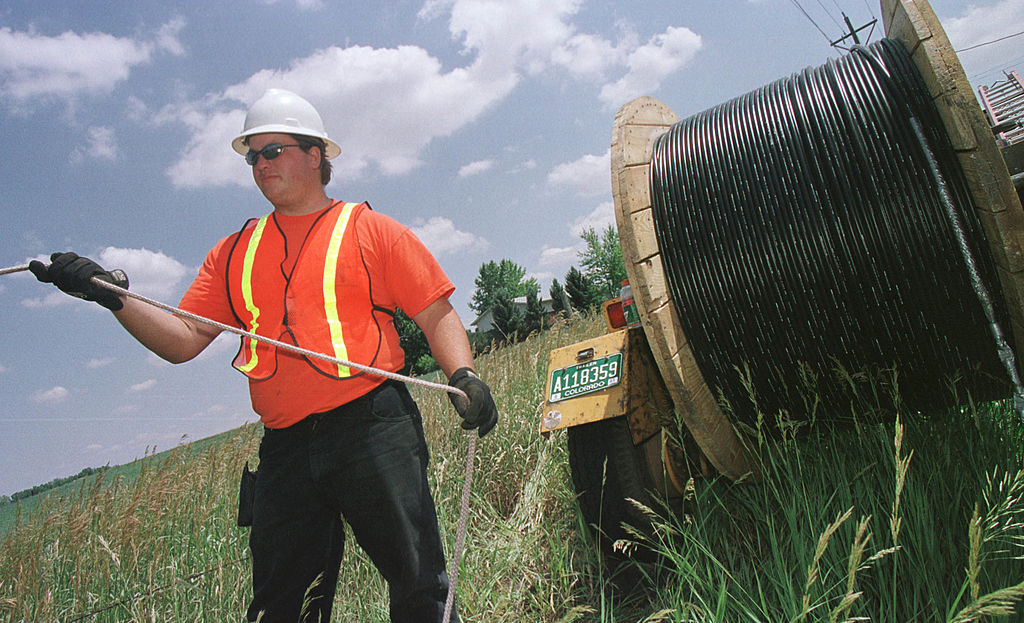
A reeltender holds a fiber-optic cable on June 21, 2001 in Louisville, CO. (Michael Smith / Getty Images)
On Monday, the public schools in Cambridge, Massachusetts officially closed their doors in an effort to prevent the spread of COVID-19. Students were sent home with homework packets, library books, musical instruments, and a Google Chromebook to connect virtually with their teachers during the unexpected break. But in Cambridge, as with so many other cities and towns across the country, not all students have broadband internet access at home. As the coronavirus threatens to wreak havoc on the world, it is laying bare America’s lackluster social provisions and deep societal divides — including its digital divide.
New research suggests that forty-two million Americans, including a quarter of rural residents, lack access to broadband internet — and this doesn’t even include the people who don’t have broadband because they can’t afford it. Nearly five million households with children, half of adults earning less than $30,000, and roughly six out of ten households in poor cities like Flint, Michigan and Trenton, New Jersey have no home broadband connection.
Millions of people end up relying on their smartphones to surf the web. A smartphone internet connection is certainly better than nothing. It provides access to email, social networks, news, information, and much more. But smartphone internet is a poor substitute. Data plans are expensive, and it is nearly impossible to apply for a job, craft a college essay, or complete a research project on a smartphone.