We Should All Dream of a World With No Scrooges
The Muppet Christmas Carol story rightly insists that greed is a sin and charity a virtue, and trumpets a future where there are no more Scrooges around.
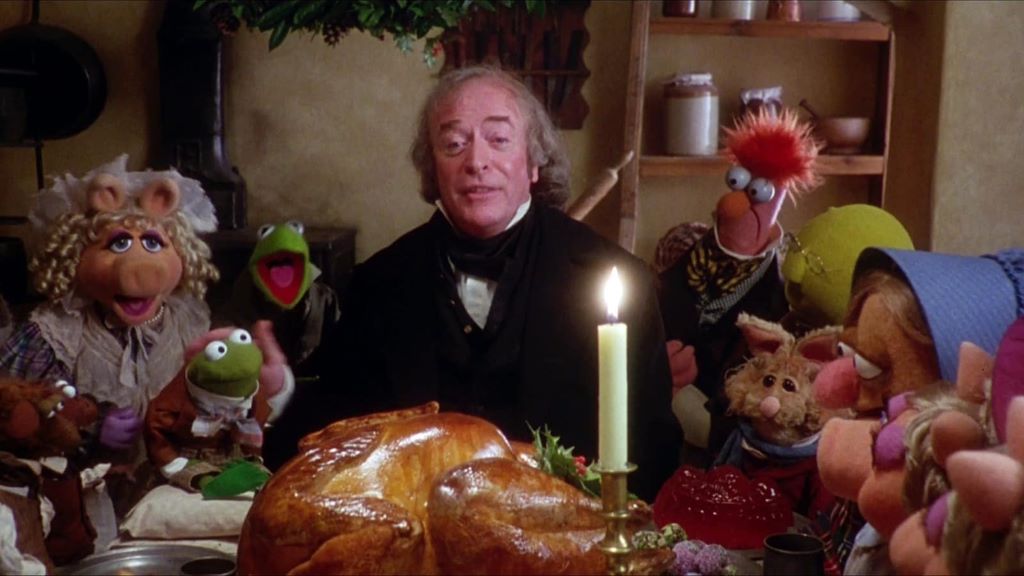
Michael Caine stars as Ebenezer Scrooge in The Muppet Christmas Carol. (Walt Disney Pictures / Jim Henson Productions)
It’s Christmastime, and the cobblestone streets of London are packed with pigs in top hats trucking cartloads of talking vegetables. Gonzo and Rizzo the Rat are selling apples for a tuppence a piece, but Rizzo keeps eating the inventory. Gonzo admonishes him, but Rizzo snaps back with an economic self-justification: “Hey, I’m creating scarcity! Drives the prices up.”
So begins The Muppet Christmas Carol (1992), the fourth feature film starring the Muppets and the first to be produced by Jim Henson’s heirs following the creator’s untimely demise. The film is a fairly straightforward adaptation of Charles Dickens’s 1843 novella A Christmas Carol, the story of a miserly misanthrope who is visited by a series of spirits on Christmas Eve. The story’s sentimentality is both tempered and deepened by the presence of Muppets, who add warmth and humor to the source material.
The Muppet version is narrated by Gonzo, assuming the role of Charles Dickens and using passages lifted directly from the text to frame the action. Much of its comic relief comes from the slapstick antics of Rizzo, who remains Gonzo’s faithful sidekick despite being set on fire, frozen solid, squished, flung into a snowbank, stuck in a chimney, and partially cooked along with the Cratchit family’s Christmas goose.