The New Dune Is Too Somber for Its Own Good
I can’t help but wonder what Denis Villeneuve's new Dune movie might have been had it chucked those handsome but cold visuals and embraced a wilder approach.
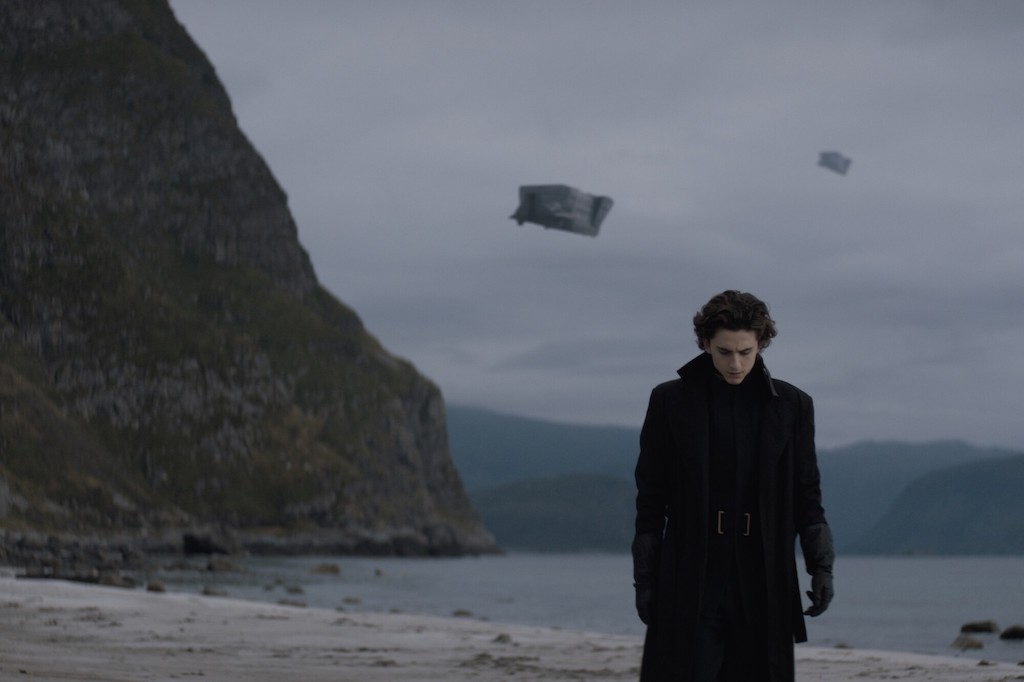
If you can’t get wild and crazy with a nearly thousand-page yarn about tripping on space peyote while riding giant worms in the desert, what can you get wild and crazy about? (Chia Bella James / Warner Bros. Pictures)
Hey, Dune-iacs! I realize the new film adaptation directed by Denis Villeneuve is a long-awaited dream come true for you. So I urge you to enthuse amongst yourselves while I talk to the other moviegoers who might casually walk in — or tune in — to see Dune without having in any way prepared for the big event.
Because I didn’t study for this exam, and I feel a bit self-conscious about it now. See, I just read a piece on the film that traced the Dune lineage from Frank Herbert’s original 1965 sci-fi novel to the aborted early 1970s film by Alejandro Jodorowsky, to the completed but much reviled 1984 film by David Lynch, to the 1990s television miniseries, to the new film directed by Denis Villeneuve, currently out in theaters and on HBO Max. It concluded, “With all of this cinema history behind it, trying to view the newest film solely on its own terms as an isolated work of art is absurd.”
And this is probably true. But things happen, people forget to study, and before they know it, the movie’s out and it’s time to go see it. And, luckily, I’m an old hand at the absurdity of cold-watching films with rich media histories, and don’t mind taking the plunge. How else could I have seen about 9 million films from all different eras, made in all different countries, often in languages I don’t speak, while knowing full well that even with an obsessive commitment to cinema, I was missing oceans of nuance and context in so many of them? What am I supposed to do, get a life instead of watching 9 million movies?