Respect Is a Weak Portrait of the Hellaciously Strong Aretha Franklin
Aretha Franklin was a legend. But the new Franklin biopic, Respect, is a forgettable film that avoids the darker and more difficult parts of her life.
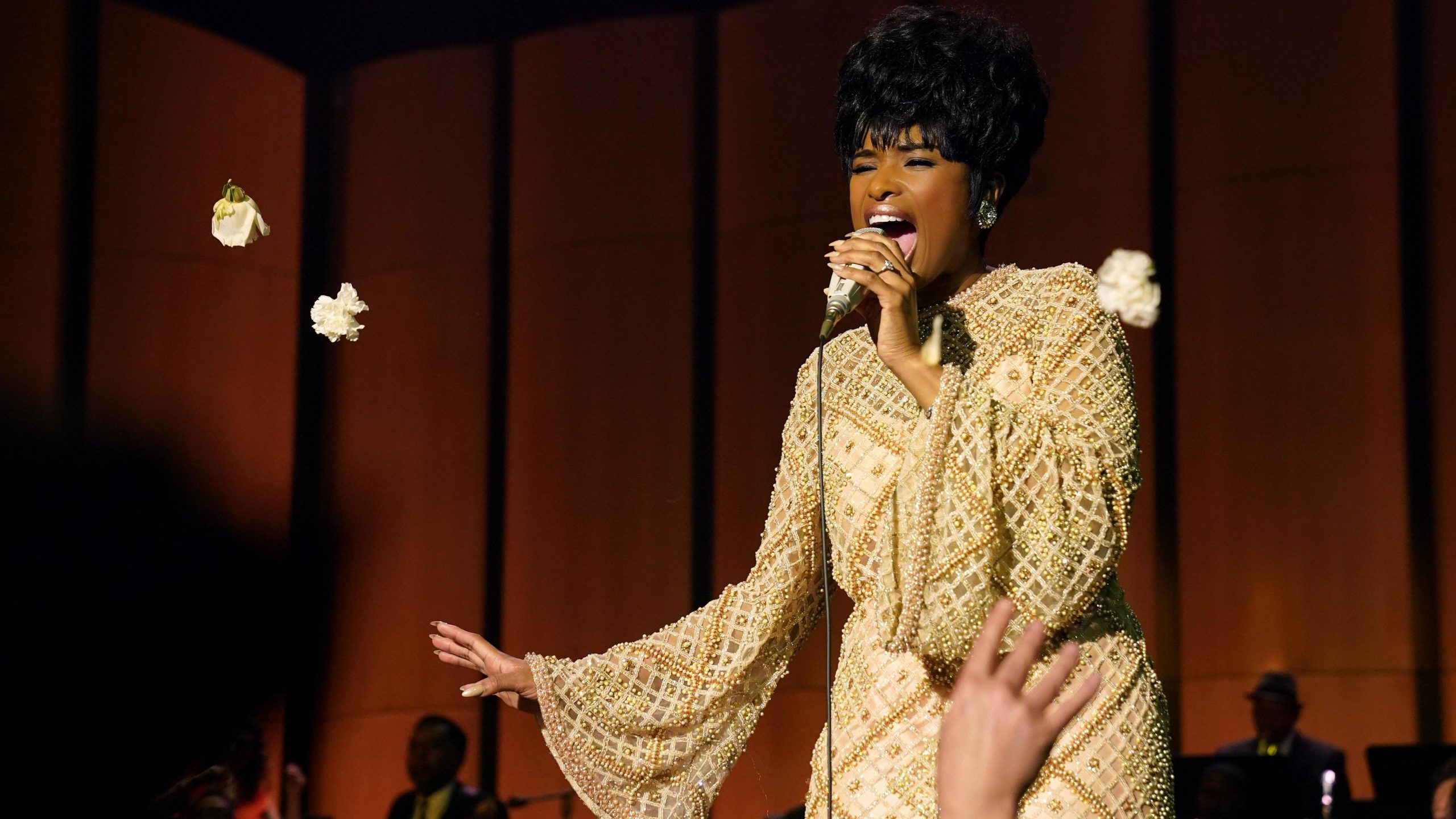
Jennifer Hudson as Aretha Franklin in Respect. (Quantrell D. Colbert / MGM)
Respect, the new biopic of legendary singer and “Queen of Soul” Aretha Franklin is, unfortunately, weak and forgettable. But it’s not the fault of Jennifer Hudson, chosen by Franklin herself to play her. Hudson works hard in the role, though her doe-eyed prettiness and softer vocal style take the edge off Franklin’s persona. The main problem is, even in a genre that’s long since become numbingly formulaic, this biopic plods through a rote narrative and makes Franklin’s life story seem somehow standardized, though it was anything but.
There’s the strangest kind of pussyfooting around the more shocking aspects of Franklin’s young life that one would assume would be the foundation of this movie. We get timid hints, such as the way ten-year-old Aretha (Skye Dakota Turner) is gotten up out of bed by her father, C. L. Franklin (Forest Whitaker), to belt out a song for the entertainment of rowdy (and frisky) party guests. This tame first scene hints at the notoriously orgiastic partying of Aretha’s father — the charismatic celebrity Pastor Franklin of the New Bethel Baptist Church in Detroit. Even Ray Charles, quite a player himself, called the congregation “a sex circus.”
At his peak in the 1950s, C. L. Franklin’s fame was so great that he commanded $4,000 per appearance at a time when the top act in the nation, Elvis Presley, got $7,500. Prominent black citizens flocked to him. Among his best friends was someone he mentored and supported through the civil rights movement, the Reverend Martin Luther King Jr (“Uncle Martin” to Aretha). Top black entertainers were friends and honorary family to the Franklins.