Waking From a Twenty-Year Nightmare
For the past two decades, the psychology of 9/11 has shaped the nation’s political landscape and thrown the world into turmoil. That era must be definitively ended.
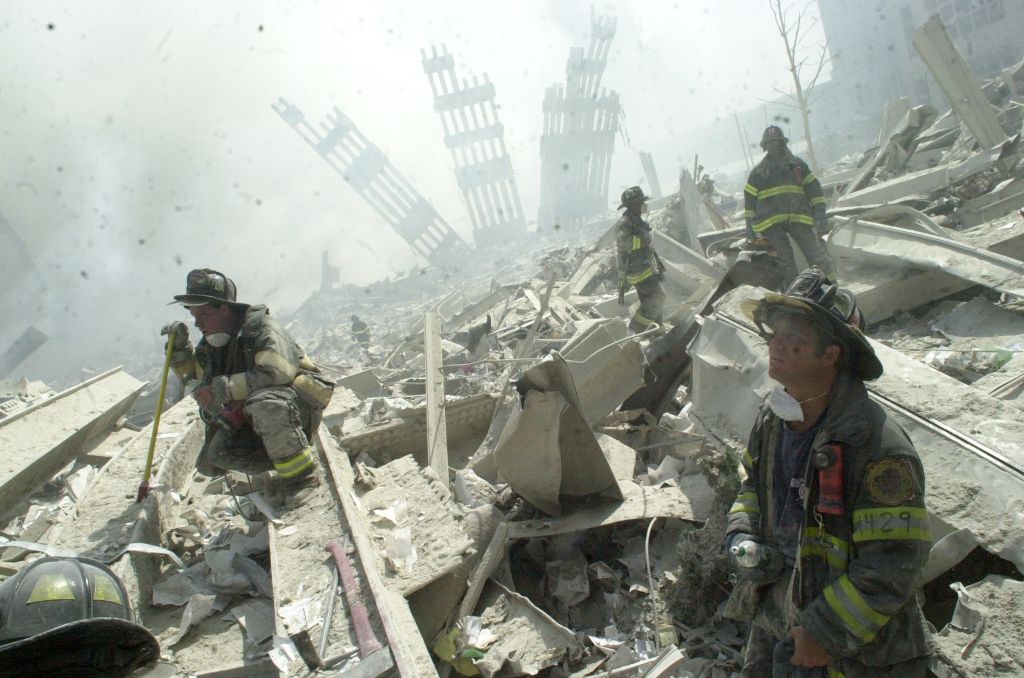
Firefighters search through the rubble of the World Trade Center on September 11, 2001. (Todd Maisel / NY Daily News Archive via Getty Images)
It’s a cliché to say it’s hard to overstate the impact of some historical event. But when it comes to the September 11 attacks, it really is true.
Not because the attacks were uniquely terrible. Three thousand dead in a terrorist attack is a senseless waste of life, but it pales in comparison to the toll of various disasters that have befallen Americans throughout their history, including the current pandemic — let alone disasters Washington has visited on other countries, some of them going on as you read this. And while the Saudi-born-and-backed terrorists succeeded in causing an enormous amount of carnage, they did not, for example, unseat a democratic government and replaced it with dictatorship, as happened in Chile on the original 9/11.
The reason the attacks continue to loom over us as they do is the official US response to them, initially set by George W. Bush and carried on and escalated by each of the liberal and conservative presidents that followed. The “war on terror” that Bush decided to launch, the great national mission that would restore the country’s direction and vitality after the years spent wandering aimlessly with no more Cold War to fight, rearranged the geopolitical map, spread death and destruction throughout the globe, and shaped the US political landscape for two decades and counting. There was hardly a field of US domestic policy that went untouched by the September 11 attacks and the foolish “war” they spurred.