The Opioid Settlement Is Good for Big Pharma. It May Not Be Good for Us.
The pharmaceutical companies that fueled the opioid crisis must be held legally accountable. But to confront the social problems at the root of the addiction crisis, we’ll need political victories, not just courtroom ones.
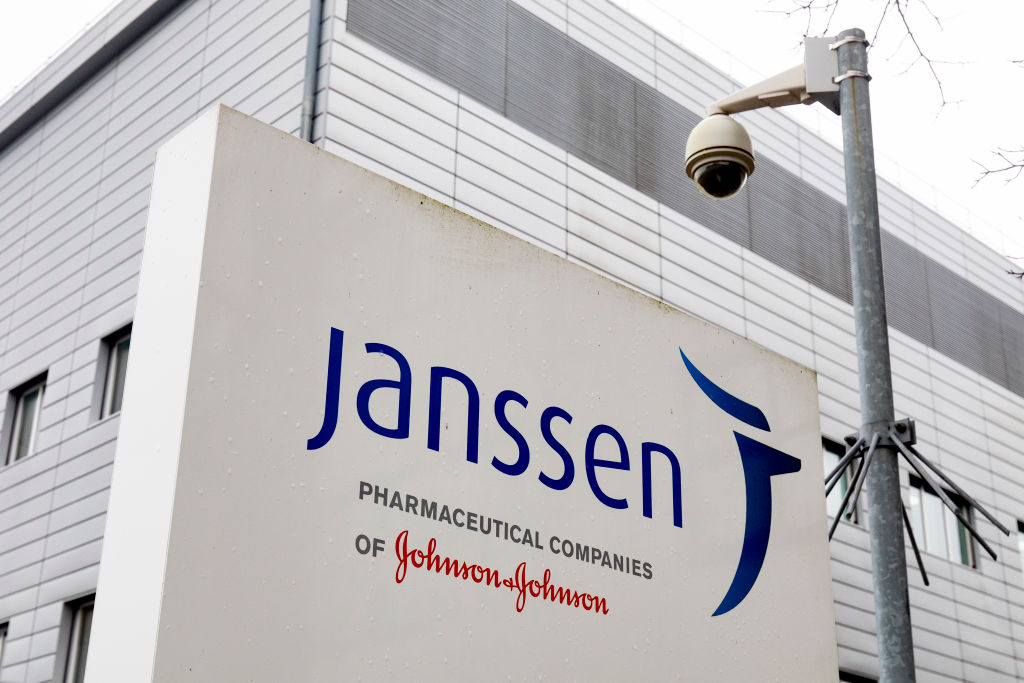
Under a new settlement, Johnson & Johnson, along with three opioid wholesalers, would pay $26 billion over the next twenty years. (Niels Wenstedt / BSR Agency via Getty Images)
In July, the attorneys general of Connecticut, Delaware, Louisiana, North Carolina, New York, and Pennsylvania announced a tentative settlement with one opioid manufacturer and three distributors, inviting other states to sign on. The agreement is shaping up to be the largest and most unique civil settlement since the tobacco Master Settlement Agreement of 1998.
Under the terms of the deal, manufacturer Johnson & Johnson (which owns Janssen Pharmaceuticals) and wholesalers McKesson, Cardinal Health, and AmerisourceBergen would pay $26 billion over twenty years to compensate states and municipalities for the cost of implementing drug-abuse treatment and prevention programs. But the companies would not be required to admit wrongdoing, and would also be shielded from further civil action in jurisdictions where the settlement applies. (In an official press release distributed after the AGs’ announcement, Johnson & Johnson asserted that all the company’s actions were “appropriate and responsible,” and the wholesalers said in a joint statement that, while they accept the settlement, they still “strongly dispute the allegations made in these lawsuits.”)
In recent years, nearly every state in the country, as well as a slew of local municipalities and Indigenous nations, have sued these companies and others for allegedly misleading the public about the risks of commercial opioid painkillers. State AGs and other plaintiff attorneys now must choose whether to drop pending lawsuits of their own in favor of the national settlement.