To MLK, Individual Greatness Could Be Found in Attacking Injustice
Martin Luther King argued that the desire for individual greatness marred US society. But he also believed that desire could be channeled into collective action, with everyone acting as “drum majors” for justice against the “triple evils" of racism, capitalism, and militarism.
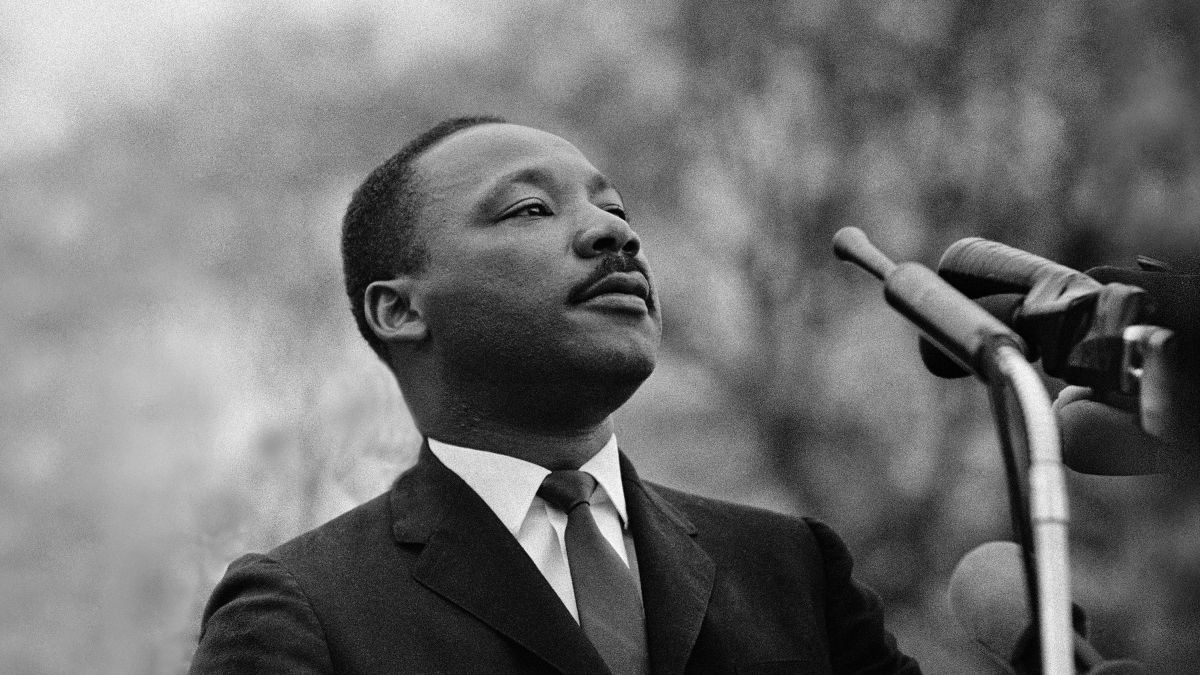
For Martin Luther King Jr, serving others was an obligation that we all must undertake to fully flourish.
On February 4, 2018, portions of Martin Luther King Jr’s sermon “The Drum Major Instinct” were broadcast to an estimated 103.4 million people. In the sermon, King urged his listeners to channel the desire for distinction in their personal lives into an unrelenting pursuit of justice in the world at large. “Recognize that he who is the greatest among you shall be your servant,” King said. “That’s a new definition of greatness.” Ironically, King’s audience in 2018 received these words over footage of the latest Dodge Ram pickup truck: the automaker had licensed the speech for use in a car commercial during the Super Bowl.
The widely criticized commercial nevertheless captured how King, his life, and his work are frequently wielded today, as depoliticized symbols of goodwill. King himself was more exacting, both in his estimation of the United States and in what must be done to redeem it. Especially toward the end of his life, when the Civil Rights Movement was moving from attacking Southern segregation to striking at North exploitation and the war in Vietnam, King described the intertwined injustices of the United States as racism, materialism, and militarism. To remedy these injustices, he advocated collective action by both blacks and whites, aimed at transforming themselves, one another, and the structures of power.
While King’s political thinking has long been subsumed under calls for charity, renewed interest in his life and work from scholars and organizers is reviving his radical legacy. Jacobin contributor Arvind Dilawar recently spoke with Justin Rose, author of The Drum Major Instinct: Martin Luther King Jr.’s Theory of Political Service, about King’s distinct conception of political service and how it fit into his vision for social transformation. Their conversation has been lightly edited for clarity and brevity.