Changing Our Individual Behavior Isn’t Going to Save the Planet
Two years since his fuel tax hike was sunk by the Yellow Vests protests, Emmanuel Macron’s new climate law again exhorts the French to show “willpower” in the fight to “make the world great again.” But the law does nothing to impose limits on the most environmentally damaging businesses — instead blaming climate change on citizens’ failure to alter their habits.
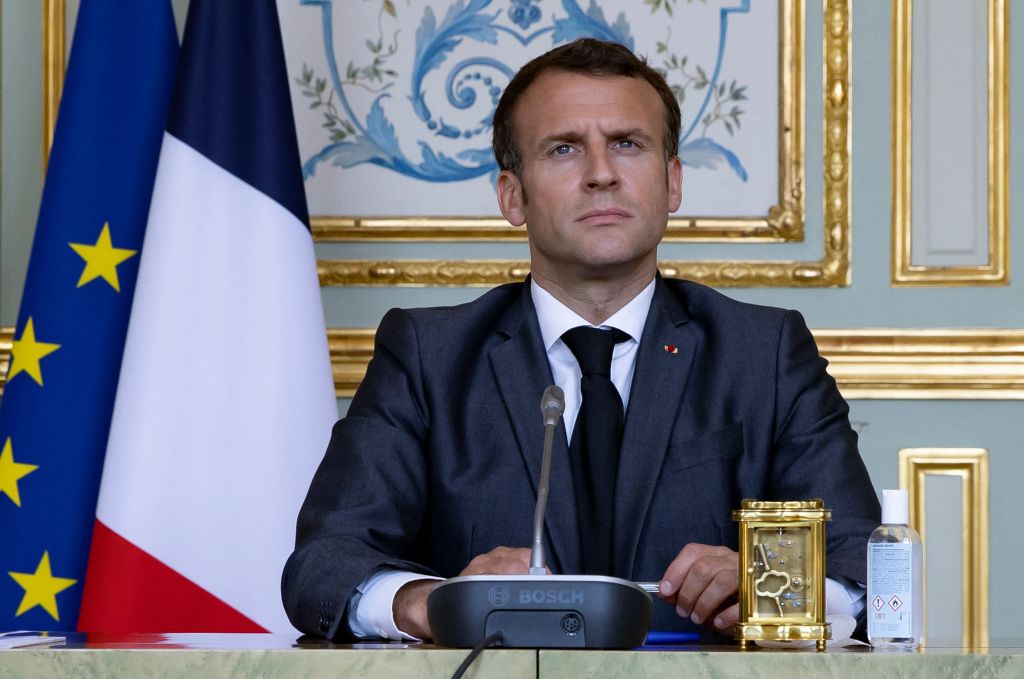
French president Emmanuel Macron attends a virtual Earth Day Climate Summit at the Elysee Palace in Paris on April 22, 2021. (Ian Langsdon / POOL / AFP via Getty Images)
In September 2018, Emmanuel Macron’s government announced a tax hike on gasoline products — claiming this would drive the shift in consumer behavior needed to fulfill France’s emissions-reduction commitments. Dismissing the complaints of his chronically discontented subjects, Macron suggested that tweaks such as these would guide individuals toward a more responsible and ecologically sustainable way of life. The sum of these changes could “make our planet great again,” the goal Macron had set for himself when Donald Trump announced the United States’ withdrawal from the 2015 Paris climate agreement.
This opening gesture toward something resembling environmental reform quickly degenerated into the first crisis of Macron’s presidency. Despite its green facade, critics claimed that the real purpose of the hike was to compensate for a tax cut on France’s largest fortunes that had entered into effect that year. Starting in late November 2018, motorists donning yellow vests began occupying roundabouts around France. Each Saturday, the Yellow Vests, or gilets jaunes, took to the streets by the hundreds of thousands, often in daylong clashes with riot police. Macron quickly backpedaled, withdrawing the proposed hike in mid-December 2018.
Two and a half years later, the dust of the Yellow Vest revolt has settled. Macron’s government is now adding the belated final touches to its environmental agenda in the form of the proposed “climate and resilience” law. Currently being debated by parliament, the legislation has drawn fierce criticism from NGOs and the divided left-wing opposition as a patchwork of half-measures, toothless prohibitions, and meek incitements. In response to the debate that the Yellow Vests have forced opened since late 2018 on a socially just energy transition, Macron is doubling down on an environmental politics grounded in corporate self-governance and individual responsibility.