To Fight Racism, Organize With Your Coworkers
Too many anti-racist efforts today obsess over individual actions like microaggressions. We need to fight racism in a collective project rooted in shared material interests — as the United Packinghouse Workers of America did in its heyday.
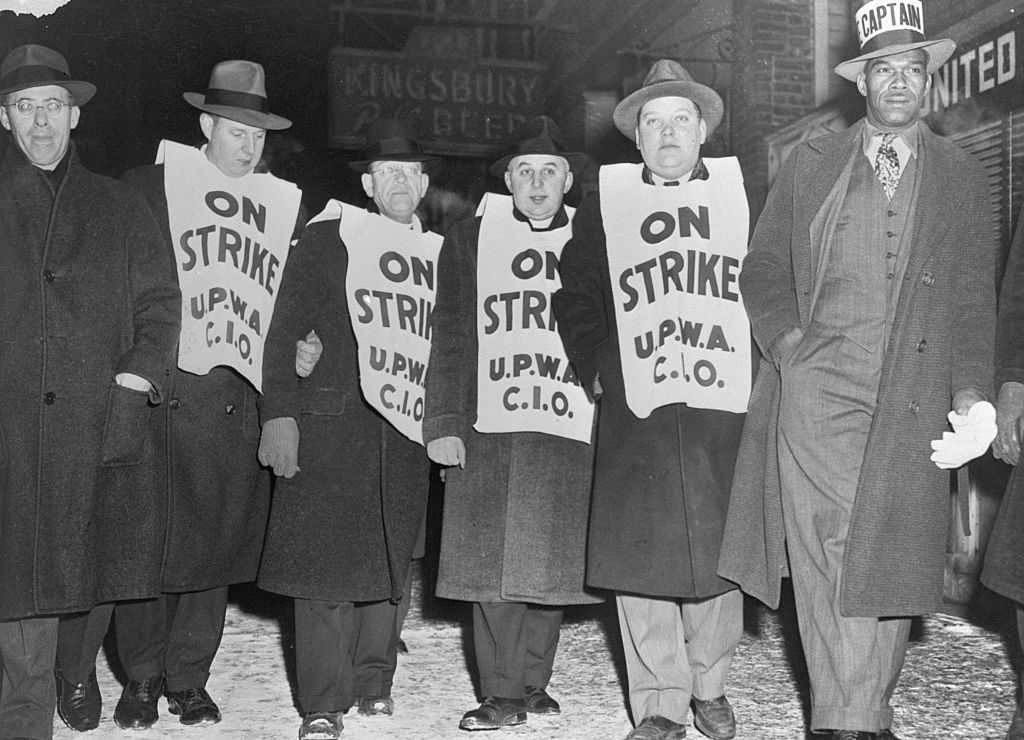
United Packing House Workers go on strike at the Chicago Stockyards strike. (Bettmann/Getty)
“The heartbeat of racism is denial, the heartbeat of antiracism is confession.” Ibram X. Kendi, the anti-racist scholar and activist, says this is one of his favorite lines about fighting racism. It makes sense, because the quote is entirely consistent with the dominant frameworks used for discussing and combating racism today.
As the latest upsurge of Black Lives Matter protests in 2020 subsided, it left in its wake an increasingly individualistic conception of how to address racial inequality. Books like Kendi’s How to Be An Antiracist and Robin DiAngelo’s White Fragility have flown off the shelves and dominated reading groups, giving white people a road map for the long path of confession, atonement, and self-improvement.
Though broader systemic inequalities are of course acknowledged in these works, the bulk of the action items center on how one can shape their thoughts and interpersonal relations in an anti-racist way. Ironically, these works tend to center the agency of the white individual. In White Fragility, Robin DiAngelo boldly claims that “white racism is ultimately a white problem and the burden for interrupting it belongs to white people.”