Work and Death in Sri Lanka’s Garment Industry
Sri Lanka is home to some of the biggest garment manufacturers in the world, and while clothing exports have risen, so have COVID-19 infections among workers. We talk to people who face the daily choice of disease or impoverishment.
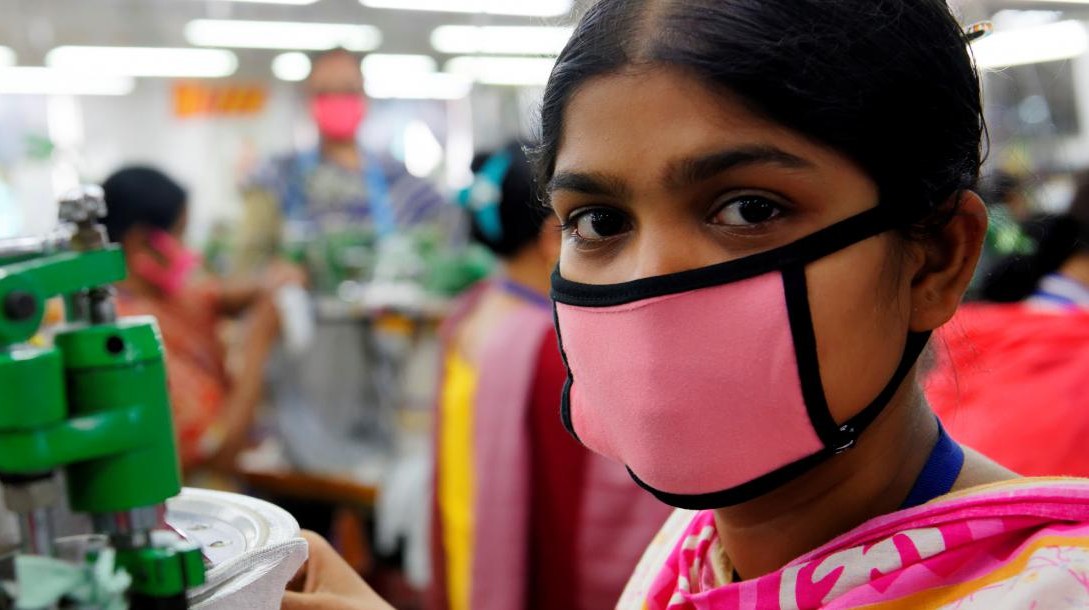
Sri Lanka’s garment workers are currently caught between production targets and destitution, sickness and increasing authoritarianism. (War on Want)
Sitting alone in a room containing two narrow beds and a small table, Priyangika is sick with COVID-19. She fell ill after the virus spread through the garment factory where she works in the vast Katunayake Free Trade Zone outside Colombo, Sri Lanka.
“When I called the owner of the boarding house to say I tested positive for coronavirus, he scolded me, saying that we bring filthy diseases,” said Priyangika, whose name has been changed to protect her anonymity.
Sri Lanka is home to some of the largest garment manufacturers in the world. Its central bank has reported a 183 percent rise in exports since April 2020 — largely attributed to the apparel sector. But even as wealthy nations in the West begin to open back up thanks to plentiful vaccines and hospital capacities, the island nation is currently experiencing a deadly third wave of COVID-19 and recently reported its highest single day of fatalities. In a globalized world of both virus transmission and clothing production, Sri Lanka’s garment workers are currently caught between production targets and destitution, sickness and increasing authoritarianism.