Simone Biles Doesn’t Owe Fans Anything
At the end of the day, Simone Biles is a worker. And she was right to put her mental health first, just as any worker should be able to stay home sick instead of pouring their life force into serving someone else.
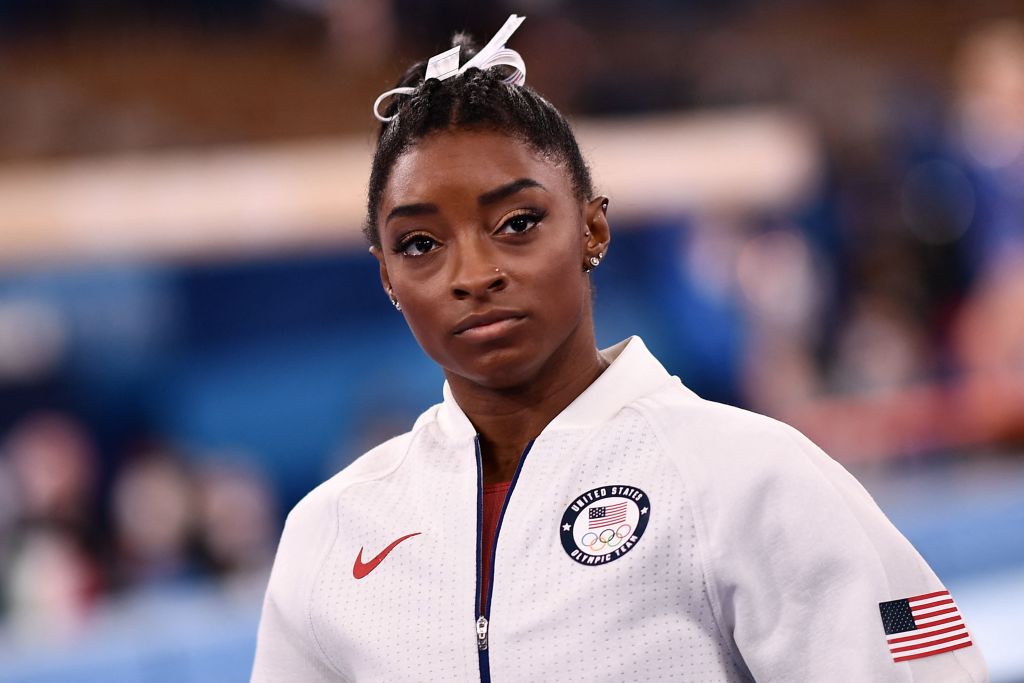
Simone Biles at the Tokyo 2020 Olympic Games on July 27, 2021. (Loic Venance / AFP via Getty Images)
There’s always something weird about the Olympics. Not the often-obscure sports themselves (this year there’s the addition of three-on-three basketball, with break dancing coming in 2024), but the contradictory pageantry of it.
On the one hand, the Olympics are a fierce national competition, where great power conflicts play out in a softer version of warfare (though sometimes no less bloody). On the other, they are, in the tradition of its ancient Greek forbear, a celebration of individual athletic prowess — the power of the human mind and body to challenge the laws of speed, strength, and endurance. These two ideals — individual athleticism and nationalist competition — typically coexist quite well, with countries’ Olympic committees offering training and sponsorship resources to athletes in exchange for their participation in literal flag-waving parades of national pride.
But this year, something broke. Simone Biles, the star of the US women’s gymnastics team — and the most decorated gymnast in world championship history — announced this week that she would be withdrawing from the final of the team gymnastics competition and the individual all-around final, the marquee event of Olympic gymnastics. In a press conference, Biles cited mental-health concerns — which she feared could also lead to physical injury in the demanding competitions where intense mental focus is a must: