How Scott Walker’s Wisconsin Paved the Way for Donald Trump’s America
Much like Ronald Reagan’s defeat of the air traffic controllers, Scott Walker’s assault on public sector unions should be remembered as a turning point in American history that opened the floodgates to new attacks on the working class — and as a harbinger of Trumpism.
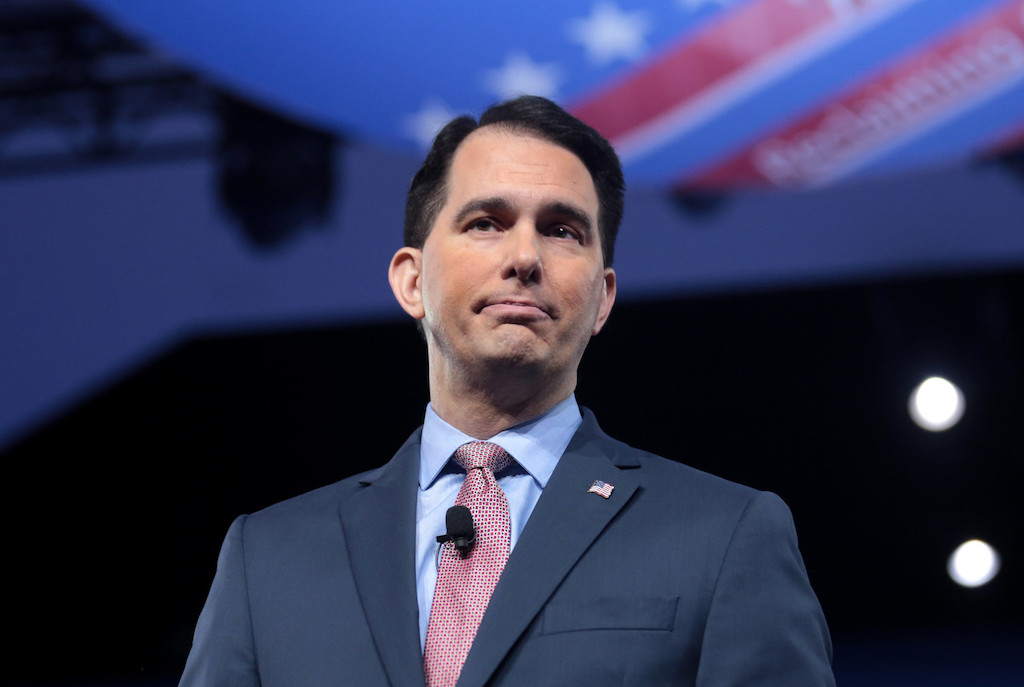
Former governor of Wisconsin, Scott Walker, 2017. (Gage Skidmore / Flickr)
In the summer of 2018, author Dan Kaufman published The Fall of Wisconsin — a lucid, disturbing account of how a right-wing offensive successfully stormed the ramparts of one of America’s most historically progressive and pro-labor states. Later that year, Republican governor Scott Walker was finally defeated in his bid for reelection, but the state’s public sector remains a shadow of its former self — and Walker’s divide-and-conquer strategy continues to be exported across the country with devastating consequences.
Earlier this month, Kaufman wrote for the New York Times about the lingering influence of Walkerism in his home state and in American politics writ large. Jacobin’s Luke Savage spoke to Kaufman about why the Republican conquest of Wisconsin matters so much — and offers deep insight into the roots of Trump’s improbable 2016 victory.
Luke Savage
To set the stage a little bit: you began your recent New York Times piece by comparing the 2011 passage of Wisconsin’s Act 10 to Ronald Reagan’s famous 1981 offensive against the air traffic controllers. For those who don’t know or don’t remember, what was the context for Act 10, and what was its immediate aftermath?
Dan Kaufman