It Started in Wisconsin
The rise and fall of Wisconsin’s remarkable 2011 uprising holds lessons for a post-Janus world.
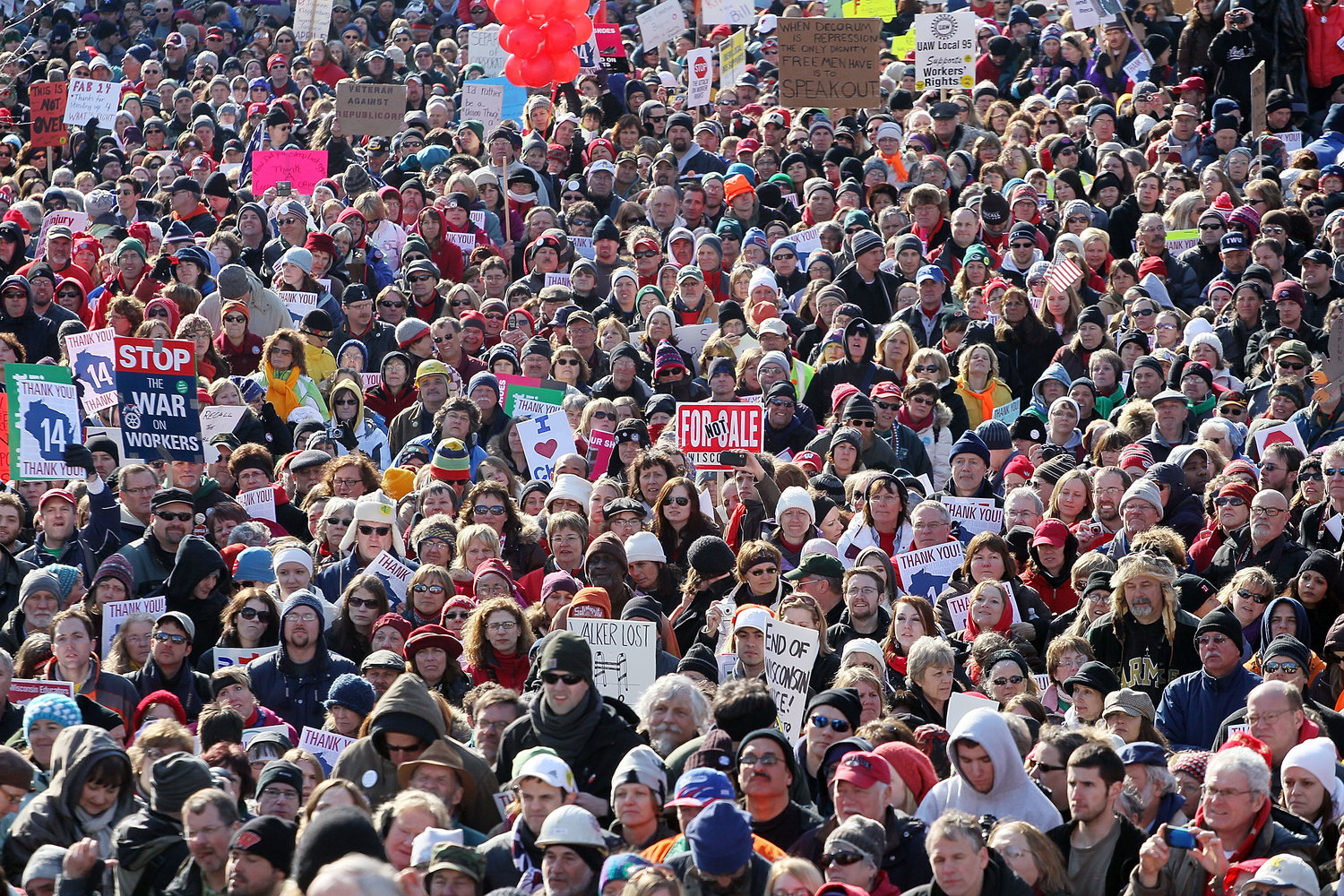
Thousands of demonstrators protest outside the Wisconsin State Capitol March 12, 2011 in Madison, Wisconsin.Scott Olson / Getty
This week, the Supreme Court of the United States opened hearings on Janus v. AFSCME, Council 31, a direct challenge to the right of public sector workers to engage in collective bargaining. Close observers of the court expect an anti-union ruling, and for this reason, Jobs with Justice, AFSCME, and others preemptively mobilized thousands of workers across the United States in rallying for union rights.
Labor organizers are preparing for the worst, but what does the worst look like?
Journalists reporting on the implications of the impending Janus decision often note that recent experiences in Wisconsin offer a preview. In this, they’re usually referring to the impacts of anti-union legislation signed into law in Wisconsin in 2011-2012. But we think Wisconsin offers another set of lessons as well: of how a twenty-first century mass uprising by hundreds of thousands — perhaps more than a million — working people came about in one US state, and of where that unprecedented uprising faltered.