The Ku Klux Klan Was Also a Bosses’ Association
The KKK should be understood not just as a white supremacist organization, but as an employers’ organization: it violently resisted the revolutionary gains of the Civil War and Reconstruction, and sought to keep the black masses toiling in submission.
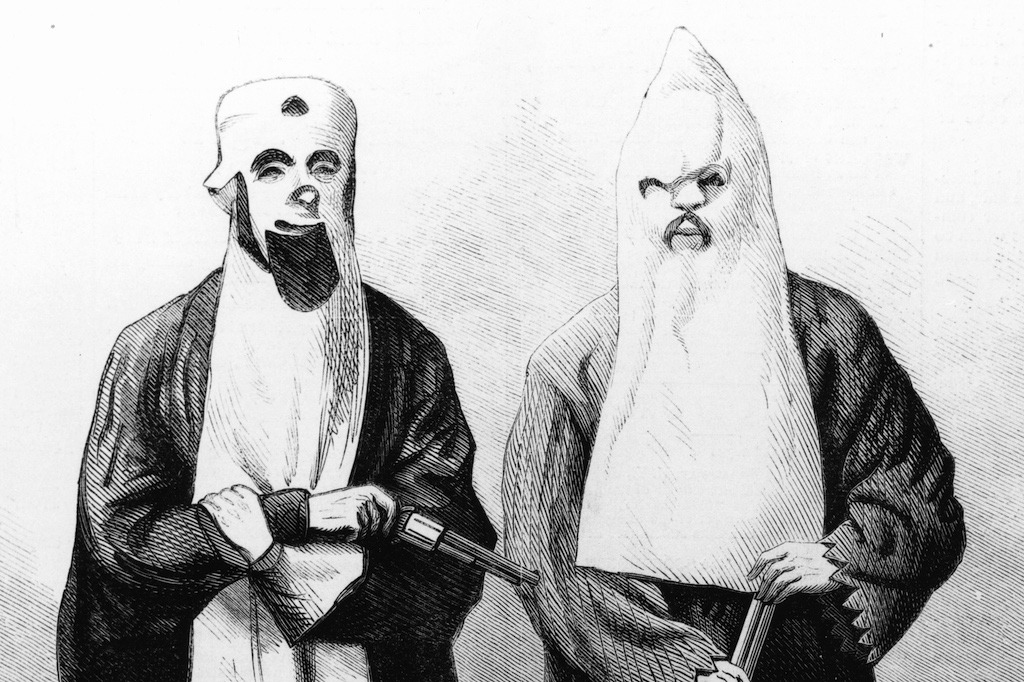
Engraving from the 1860s depicting two members of the Ku Klux Klan wearing hoods and holding weapons. (Archive Photos / Getty Images)
The Civil War revolutionized Southern labor relations. Enslaved people fled plantations, took up arms against their brutal exploiters, and forged new political horizons. The future appeared promising.
For plantation owners, however, this transformation was a nightmare — the laborers they held in bondage had waged a “general strike,” as W. E. B. Du Bois later called it, leaving them financially vulnerable and intensely rattled. This racist, revanchist group didn’t simply mourn their defeats — they organized.
Through the Reconstruction years, the mostly planation-based Southern ruling class fiercely resisted the efflorescence of black freedom. Restrictive Black Codes, the pro-planter polices of President Andrew Johnson, racist riots in Memphis and New Orleans, and, above all, the widespread terrorism of the Ku Klux Klan brutally demonstrated the limits of emancipation. Led by former slave owners, the Klan meted out various forms of violence to prevent African Americans from voting or attending schools, intimidate northern “carpetbaggers,” and ensure, according to an undated Klan document, that freed people “continue at their appropriate labor.”