Fighting the Klan in Reagan’s America
The KKK was on the march in the 1980s. What strategies worked to stem their rise?
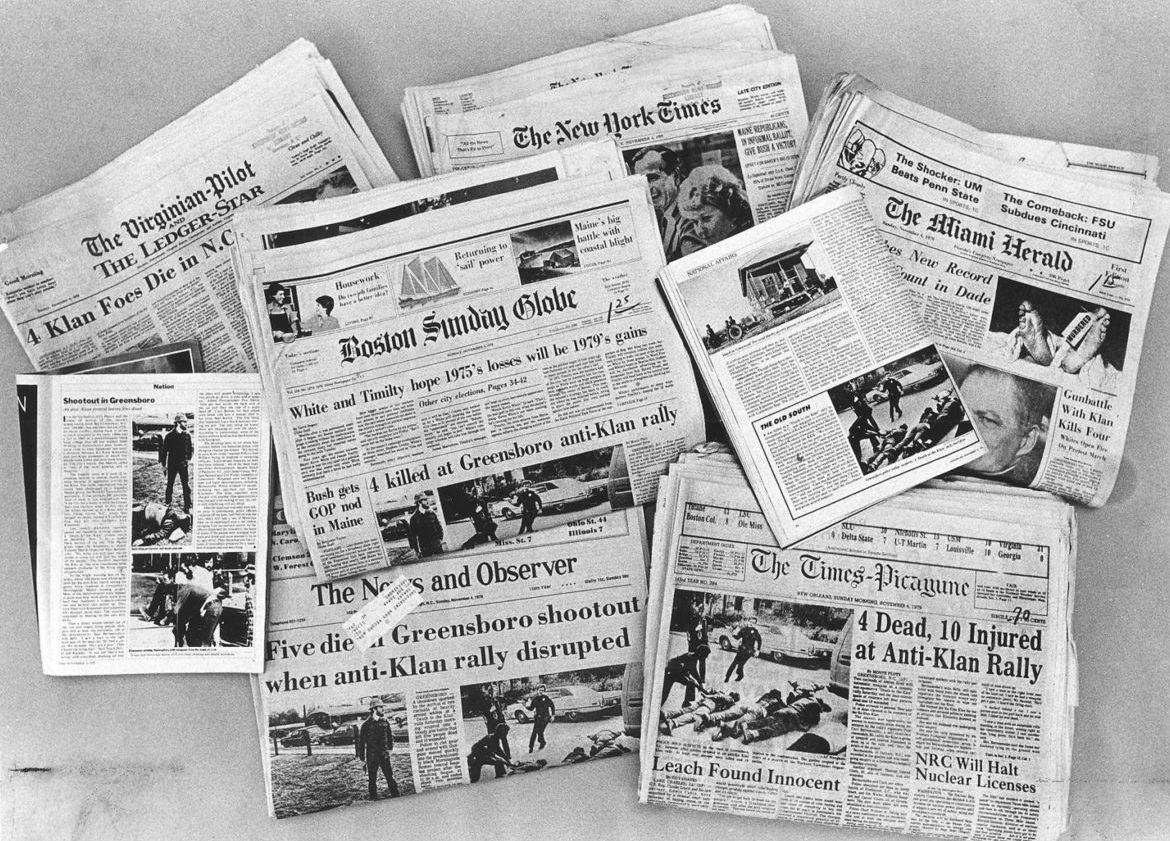
The front pages of major newspapers the day after the Greensboro Massacre.
The recent far-right rallies in Charlottesville and Boston seem to offer two possible visions of the future. Will the resurgence of white supremacist organizing take us down a path of chaos and spiraling violence, as in Charlottesville? Or will the far right — a still relatively powerless, if vocal, minority — be outnumbered, humiliated, and beaten back with little fanfare, as in Boston?
At times it can seem like this dramatic reappearance of racist, far-right movements is a return to an uglier time. It’s harder to visualize such events as peaks in a long-running continuum.
But examined from the perch of history, this is precisely how they appear. In fact, one of the last major resurgences of white supremacist organizing occurred relatively recently — not way back amid the rise of fascism in the 1930s, but at the start of the 1980s. Examining this history not only provides some much-needed perspective — it may provide lessons for antifascists today.