Jamaica’s 1831 Revolt Dealt a Hammer Blow to Colonial Slavery
In 1831, slaves in Jamaica took up arms against murderous exploitation by the island’s plantation owners. Their courageous rebellion, at the halfway point between Haiti’s revolution and the US Civil War, was a landmark in the battle for slave emancipation.
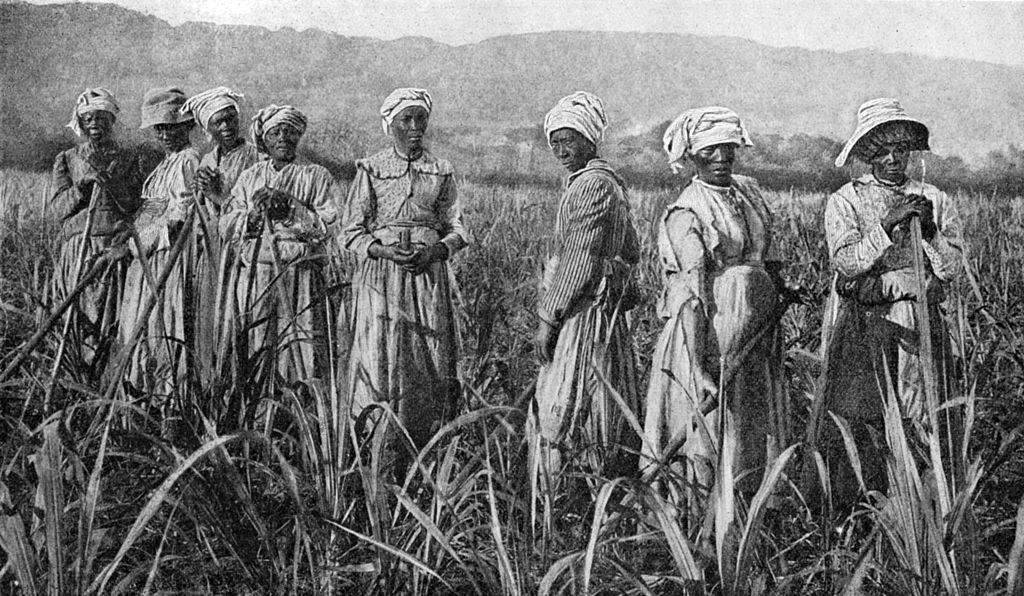
Women tending young sugar canes in Jamaica. (The Print Collector / Print Collector / Getty Images)
Tom Zoellner’s book Island on Fire is an important contribution to our understanding of what Saidiya Hartman has described as the “afterlife” of slavery. Zoellner documents in vivid detail the base violence and inhumanity of institutionalized slavery in plantation-era Jamaica. But he also tells a story of irrepressible resistance and self-organization that generated the slave rebellion of 1831.
It was a mass uprising that became a critical turning point in the demise of a system that had sustained Europe’s empires for centuries. Island on Fire is not light reading. The details recounted by Zoellner, who draws on extensive historical documentation, are often harrowing. However, his storytelling ability makes this history extremely readable, if not less painful.
Suburb of Hell
The author describes white plantation society in colonial Jamaica as “a suburb of Hell,” where “the stultifying class system that reigned back home in England was completely reframed in the West Indies.” The main defining characteristic of this colonial society was the accumulation of black Africans as slave property and the use of their labor. One clear mark of class privilege among the plantation owners was absenteeism: those who could afford to leave the island, “the moneyed overclass,” would return to England.