How Germany’s Far Right Is Building Up Anti-Immigrant Parties in the Balkans
When the far-right Alternative für Deutschland is reelected to the German parliament this fall, its party foundation will receive up to €80 million a year in state funding. The party already has nationalist and fascist allies across ex-Yugoslavia — and now, it will use federal funds to support their reactionary organizations.
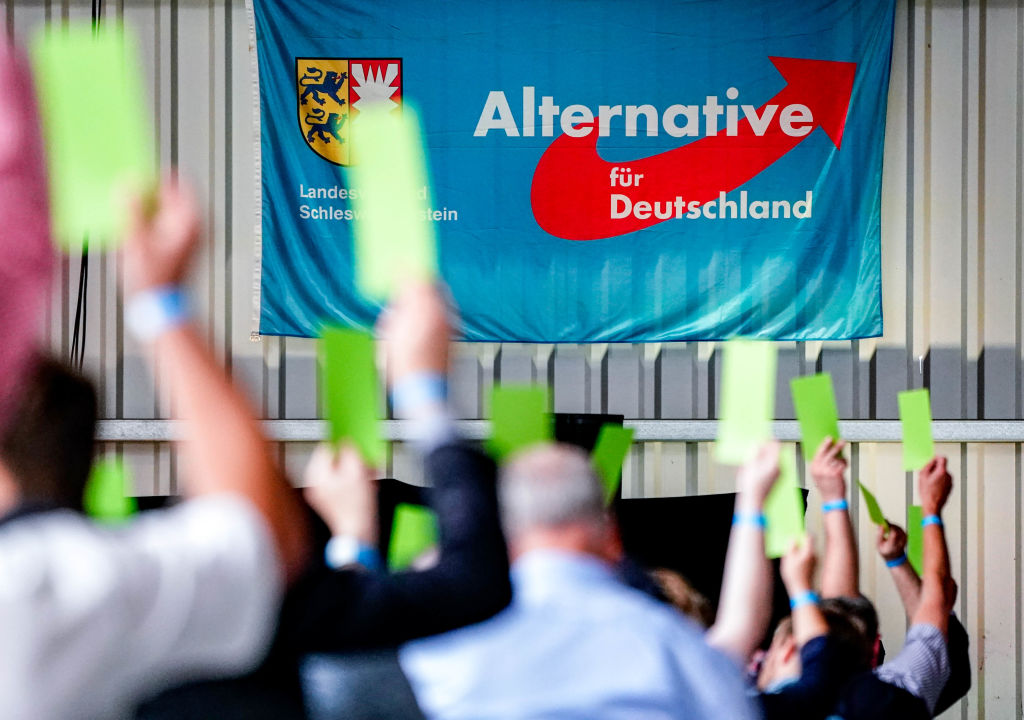
Delegates raise their voting cards at the state conference for the far-right party Alternative für Deutschland. (Axel Heimken / picture alliance via Getty Images)
Today Serbia’s main right-wing opposition party, Dveri Sprske (literally, “The Serbian Doors”) is also the major Balkan ally of Germany’s far-right Alternative für Deutschland (AfD). For many years Russian-oriented in both its financial and political support, more recently Dveri began to combine its pro-Kremlin stance with this German allegiance after AfD’s breakthrough in the 2017 federal elections.
Dveri has no parliamentary presence — while it did elect MPs in 2016, most of the opposition parties boycotted the 2020 contest, which saw rock-bottom turnout. Yet even on the outside it has exchanged visits with top AfD officials including MPs from the German Bundestag. It’s an example of how German parties and their foundations can help build up allies in the Balkans — including on the far-right wing of politics.
Creating Dveri
Unlike the Yugoslav wars of secession during the 1990s, Serbian nationalism in the twenty-first century has hardly been seriously analyzed. According to Srđan Mladenov Jovanović, a Serbian scholar living in China, contemporary nationalism “has been concentrated around certain extreme right-wing groups, chief among them Dveri srpske.”