The EFF Cannot Deliver Radical Change in South Africa
South Africa’s Economic Freedom Fighters positions itself as a radical party opposed to the ruling government. But its race-centric program overlooks the main source of oppression in postapartheid South Africa: capitalism.
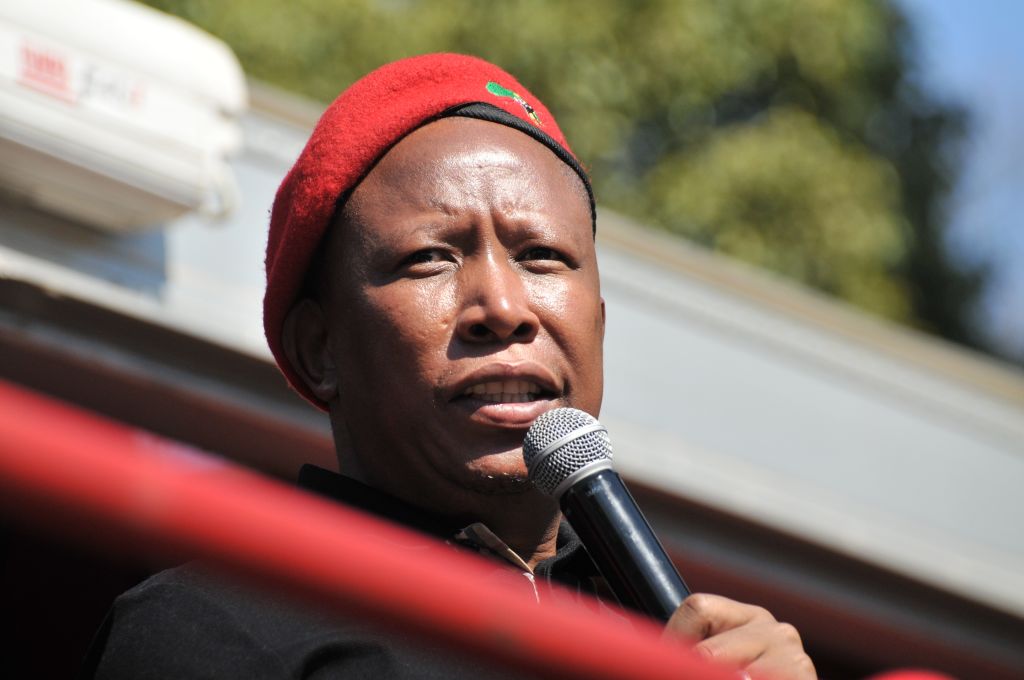
Julius Malema, leader of the the Economic Freedom Fighters, speaks at Uitsig High School in Centurion, South Africa, on June 16, 2021 (Laird Forbes / Gallo Images via Getty Images)
Reading the Economic Freedom Fighters’ (EFF) manifesto for South Africa’s last general election in 2019 and watching their online lecture series, one sees a party that offers Pan-African socialism. The thought of Frantz Fanon has converged with Marxist-Leninism to supposedly deliver a revolution deferred twenty-seven years ago.
But postapartheid politicians are infamous for talking left and walking in every other direction. Has the EFF’s professed commitment to socialism remained steadfast? Have their radical ideals been made tangible in the actions of the party throughout its brief history?
An overview of the EFF in the past and present reveals a party bloated by ideological ambiguity and contradiction. Lacking an ideological anchor, they often misdiagnose the source of the country’s major crisis, offering antiquated solutions while also undermining their ability to achieve their stated objectives.