Colombia’s Future Is Up in the Air
After weeks-long massive protests were put on pause, Colombia’s future is more uncertain than ever. The 2022 elections will be critical in determining whether the country will return to the miserable status quo under the thumb of the United States, or blaze a new leftward path.
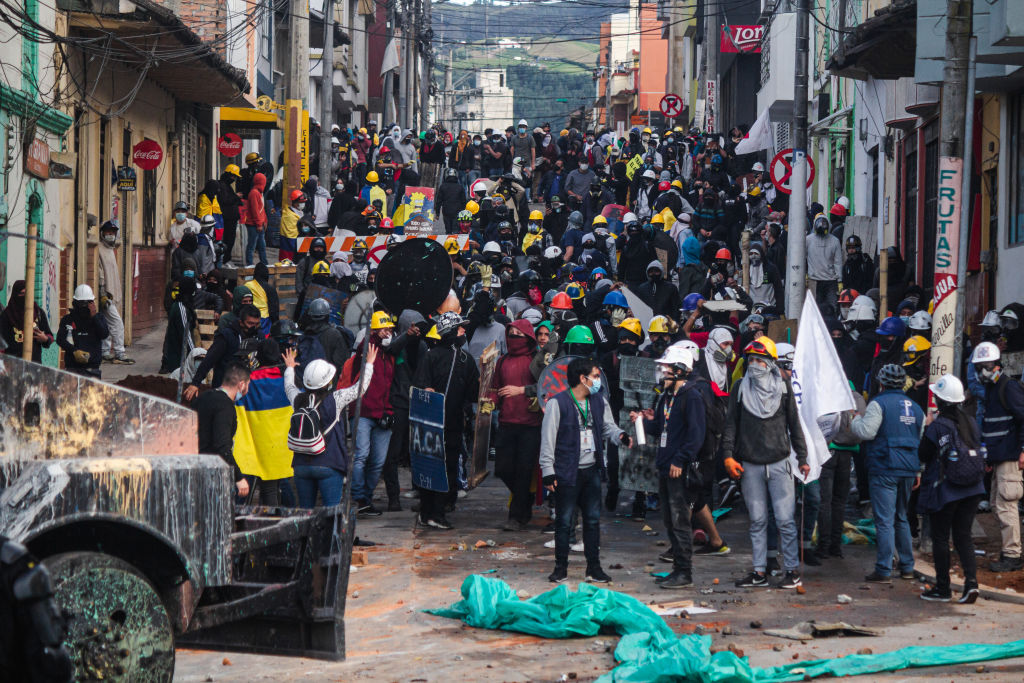
A group of demonstrators fights a riot armored truck amid clashes between demonstrators and Colombia’s riot police (ESMAD), as Colombia marks a second month of anti-government protests in Pasto, Colombia, on June 28, 2021. (Sebastian Maya / Long Visual Press / Universal Images Group via Getty Images)
Beginning earlier this summer, Colombia was rocked by weeks of unprecedented anti-government protests that left behind wreckage in many of Colombia’s cities, from Cali to the capital Bogotá, reminiscent of the bitter days of its civil war. But despite heavy police brutality, many Colombians felt hopeful that real change was within reach.
Today, Colombia’s cities have returned to a bizarre state of tranquility. Leaving a trail of damaged infrastructure, the protests were suspended in early June amid a surge in COVID-19 cases. But Colombians have pledged to restart the protests on July 20, when the new legislative period starts. Union leaders are already working on laws to present to Congress on that date.
The protests started as peaceful marches on April 28, 2021, in response to proposed tax reforms, which increased food and utility prices, as well as a hike in income tax. But a year into the pandemic that has pushed more than 3.5 million Colombians into poverty, that tax reform — which would have seen anyone with a monthly income of $656 or more affected — only fueled long-brewing anger.