Australia Is Making a Bid for Power in the Pacific
As the US continues its slide toward cold war with China, pressure on Australia to maintain its dominance in the South Pacific has only grown. Ever the dutiful ally of the US, Australia is now earning accusations of imperialism from its Pacific neighbors.
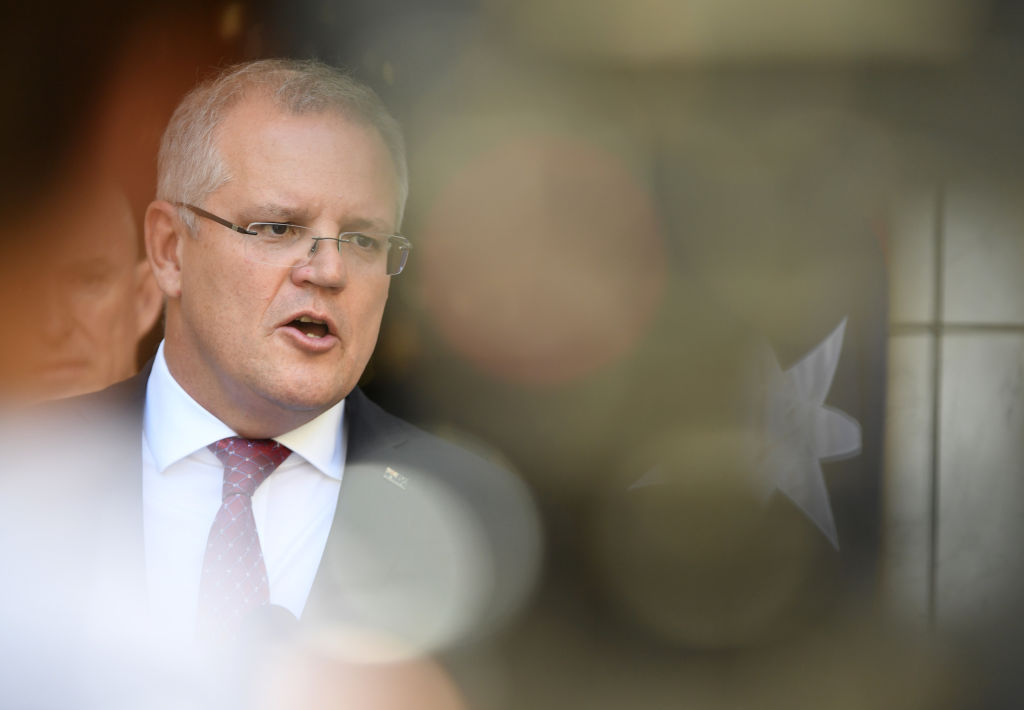
Prime Minister Scott Morrison speaks to media during a press conference in Canberra, Australia, 2019. (Tracey Nearmy / Getty Images)
Australia’s ability to uphold its dominance in the Pacific is seen as an important test of its credibility as a US ally. But even in this restricted sphere, it can be hard for Australia to act without American support, as the case of the 1999 intervention in East Timor shows. We now know that John Howard only decided to dispatch Australian troops to the island once America had pressured Jakarta to accept a peacekeeping mission and scale back the militia violence.
Until that time, the Howard cabinet had preferred to continue Australia’s longstanding policy of support for the Indonesian occupation, even going so far as to withhold intelligence on the ongoing violence against Timorese civilians from the United States. When the decision was finally made for the Australian-led International Force East Timor force to go in, Howard was desperate to secure an American troop commitment to accompany it, but Washington was wary of getting too involved. Eventually a single warship with 900 marines was dispatched to keep a watching brief off the Timorese coast.
We now know a lot more too, about Howard’s purpose in “liberating” East Timor, as the sordid details of Australia’s efforts to spy on Timorese officials and swindle the impoverished nation of its resources have come to light. The close collaboration between Australian officials and Woodside Petroleum in seeking to maintain the lion’s share of the Greater Sunrise oil and gas fields exemplifies the way that Australian policy prioritizes the interests of elite corporate actors above the welfare of the people of the region.