In the Era of Decolonization, West Indies Cricketers Refused to “Grovel”
The 1970s in the Caribbean were marked by major political and social upheaval. Cricket became a primary vehicle for asserting West Indian independence — and defeating England was paramount.
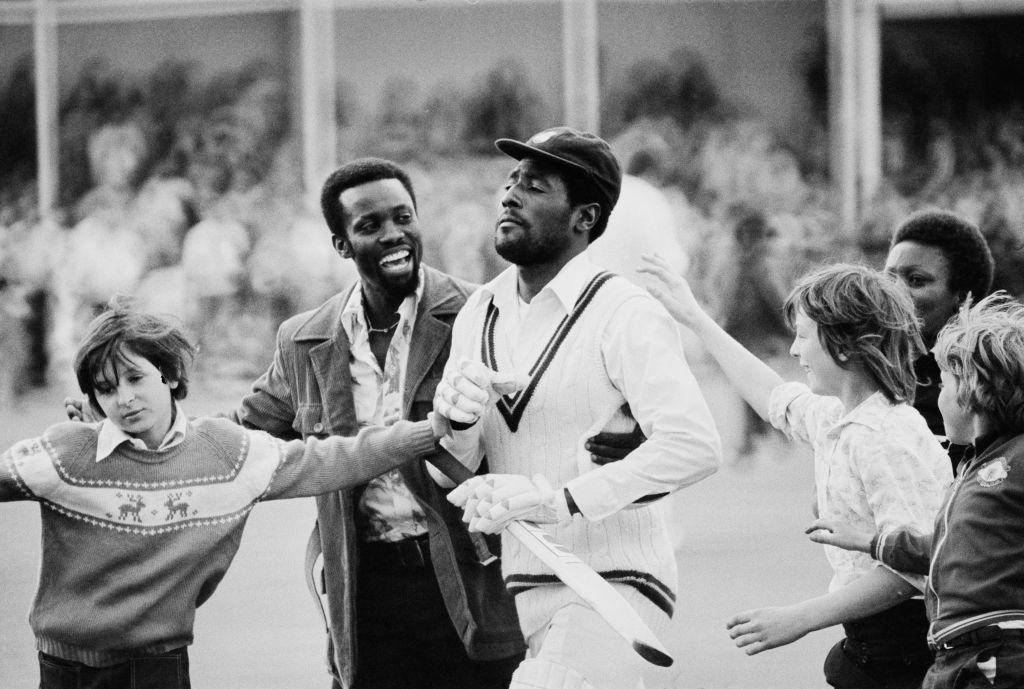
West Indies cricketer Viv Richards is greeted by fans after the 1st Test Match, West Indies tour of England at Trent Bridge, Nottingham, UK, 3rd June 1976. (Wood / Evening Standard / Hulton Archive / Getty Images)
The summer of 1976 was Britain’s hottest in 350 years. The West Indies cricket team was there all season long, playing England in city after city in the oppressive heat. There was a lot riding on their performance. To the cricketers and their fans back home in the Caribbean, the team’s mission went beyond athletics.
Though the West Indies had produced some legendary international cricketers and won stirring victories, its players were often condescendingly referred to as “calypso cricketers,” entertaining but not particularly serious. Now they intended to prove themselves a capable force in the sport. Under the leadership of new captain Clive Lloyd of Guyana, the “Windies” had been building skill and discipline, and reimagining their approach to the game.
Driving this project of reinvention was the pervasive feeling that the team had come to represent something bigger than itself. West Indies cricket, writes historian Hilary Beckles, “was born, raised, and socialized within the fiery cauldron of colonial oppression and social protest. In its mature form it is essentially an ideological and politicized species and knows no world better than that of liberation struggle.” To players and supporters in the mid-seventies, West Indian cricket symbolized self-determination.