In a Village Named After Franco, Spain Is Struggling to Overcome the Fascist Past
One of the three hundred settlements founded by Franco's regime, the village of Llanos del Caudillo is still today named in homage to the dictator. Villagers' nostalgia for his regime reflects Spain's failure to reckon with its past — and the ongoing struggle to gain recognition for fascism's victims.
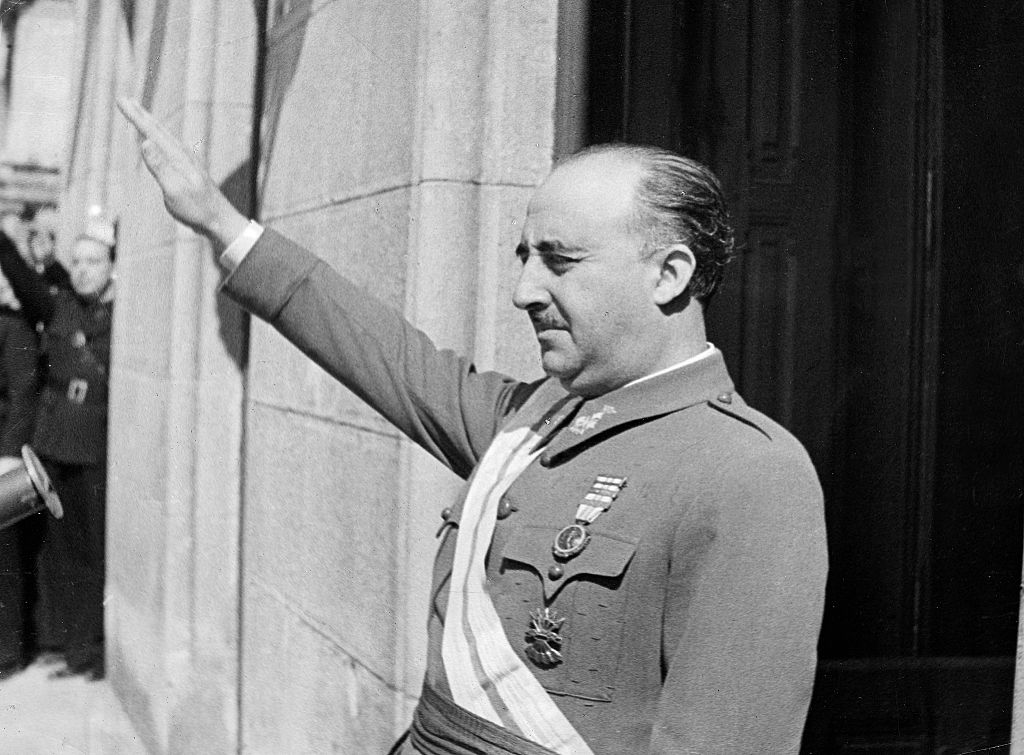
Francisco Franco in 1936. (Ullstein Bild via Getty Images)
The village of Llanos del Caudillo, in Spain’s Castilla La Mancha region, is one of three hundred “colonies,” or settlements, christened by the Francisco Franco’s dictatorship in the decades after the Civil War. Its historic link to his regime is still today visible in its name: Llanos — “plains” — del Caudillo — “of the leader.”
Established in the 1950s by the agriculture ministry’s National Colonization Institute, the settlements reflected the Franco regime’s disastrous policy of economic “self-sufficiency,” beginning with the drive to repopulate or “recolonize” devastated rural areas in the aftermath of the war. This further served the regime’s ideological mission to create a new, predominantly rural society from both fascist and traditionalist elements. Drawing on Italian fascist Benito Mussolini, whose regime embarked on a città nuove (new cities) initiative, the Institute promised:
To “give” peasants a plot of land. To forge a New Man. To build a Fascist, anti-urban, anti-proletarian Man – tied to the soil and loyal to the regime. The new man is the debtor of assets controlled by the party: home, land, and work.