Franco’s Stooges Still Dominate the Spanish Economy
Four decades since Spain’s transition to democracy, nostalgists for the Franco era are sharply resisting calls to topple its monuments and recognize its victims. Their fight to control historical memory isn’t just a “culture war” — it’s a bid to defend the power of businesses that profited from the fascist regime.
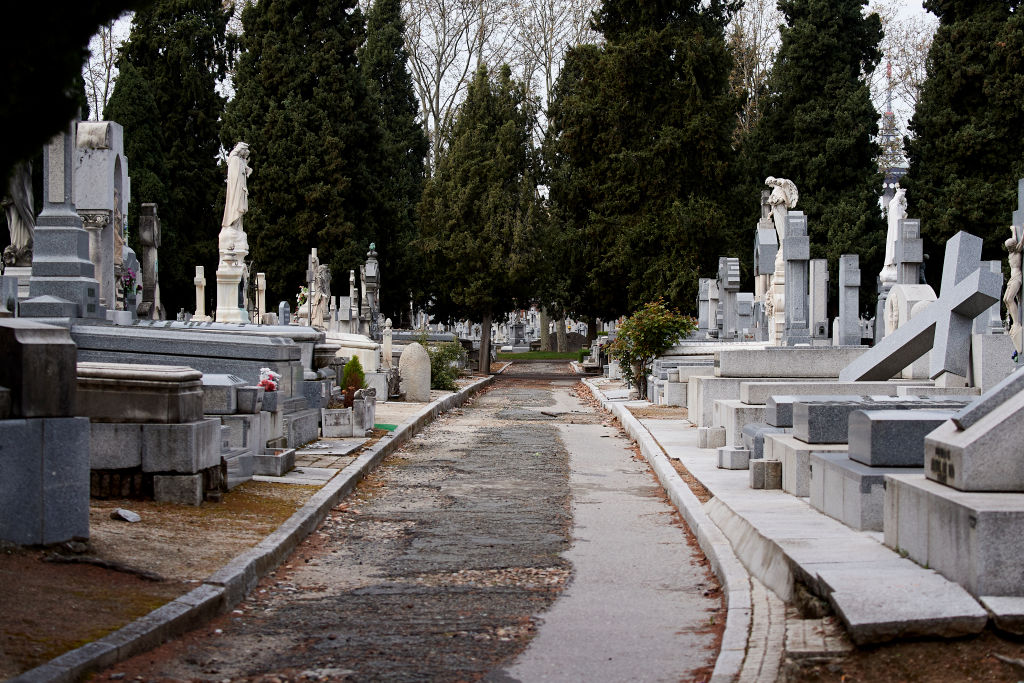
General view of La Almudena Cemetery in Madrid, Spain. Madrid’s right-wing city council gave the order to dismantle one of Madrid’s few monuments to the people massacred by fascist dictator Francisco Franco. The memorial was dedicated to the 3,000 Republican prisoners who were executed in the city’s Almudena Cemetery in the aftermath of the civil war of 1936–39. (Carlos Alvarez / Getty Images)
Last November, Madrid’s right-wing city council gave the order to dismantle one of the Spanish capital’s few monuments to the people massacred by fascist dictator Francisco Franco. The memorial was dedicated to the three thousand Republican prisoners who were executed in the city’s Almudena Cemetery in the aftermath of the civil war of 1936–39.
Shortly before Christmas, the marble tablets with the victims’ names were removed and images soon surfaced of many of them lying smashed on the ground. In February, the council erased practically all the remaining inscriptions — including verses from poet Miguel Hernández, another of Franco’s victims. For a family member of one of those executed, the intent behind the move was clear: “That which is not named, does not exist. This is what they are aiming for.”
The memorial had been an initiative of the previous left-wing city government headed by Manuela Carmena, which lost office in May 2019 to a hard-right coalition backed by the extremist Vox party. New mayor José Luis Martínez-Almeida, from the conservative Partido Popular (PP), accused the Carmena administration of “sectarianism,” “sowing hate,” and imposing a “hierarchy” of victims by erecting the monument. His right-wing administration is now insisting on the need for an alternative, generic memorial dedicated to all those who “suffered violence” during the war — thus removing any reference to the specific Nationalist atrocities that took place at the cemetery.