The Karl Marx of Music
Composer Hanns Eisler was a lifelong communist and self-described Jacobin. His music provided the soundtrack for both the tragedies and triumphs of German antifascism.
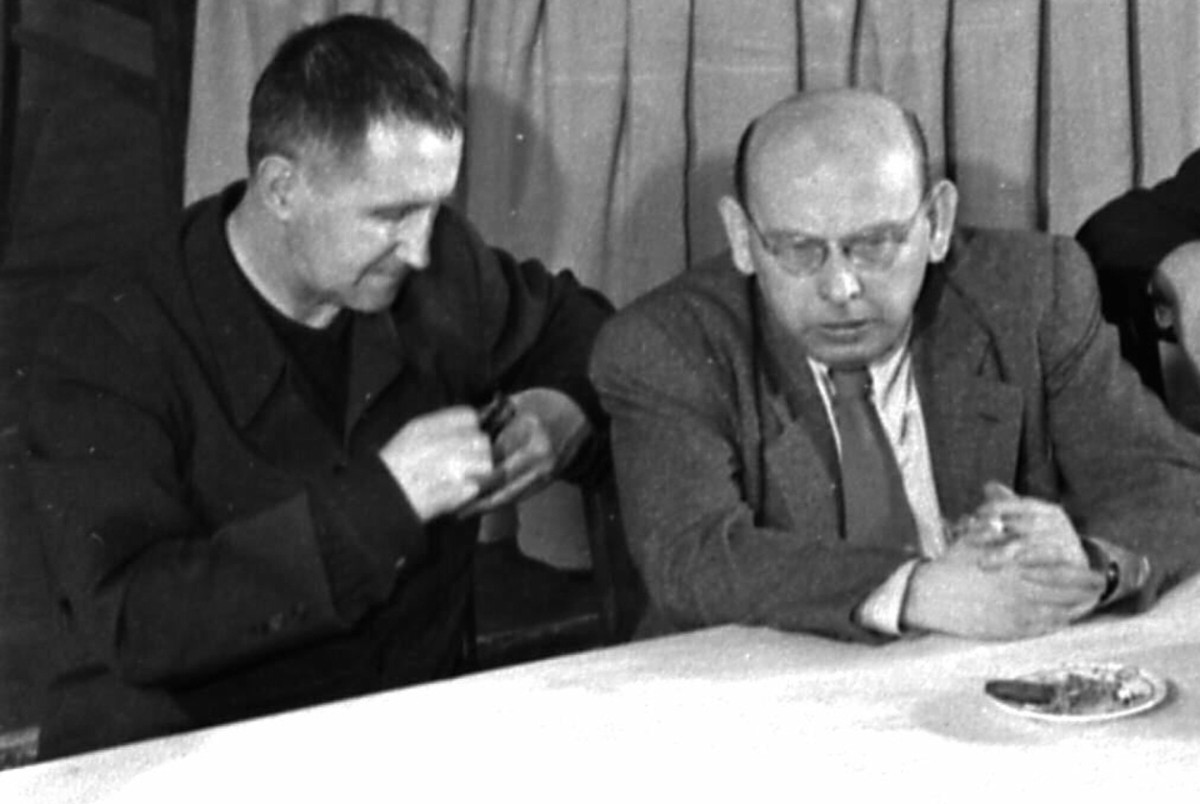
Bertolt Brecht and Hanns Eisler, date unknown.City of Liebzig, Germany.
Hanns Eisler was one of the towering composers of the modern era. Yet his biography reads more like a spy thriller than the academic careers of many of his musical contemporaries. Born in 1898 into a struggling petit-bourgeois family, his life took in some of the decisive moments of the twentieth century, from the front lines of World War I to Berlin during the rise of Nazism, Civil War Spain, McCarthyite America, and Cold War-era Germany.
A talented composer of film scores, the double Oscar-nominee Eisler is perhaps best known for writing the national anthem of the GDR (German Democratic Republic), the state founded in the eastern portion of Germany after World War II. The optimistic message of Auferstanden aus Ruinen (Arisen from Ruins) reflected the promise of overcoming the crimes and devastation of the Nazi era.
The socialist future was not realized: the new state was born in harsh circumstances and ultimately collapsed. But Eisler, who died in 1962, also represented a generation that had felt fascism on their own hides and sought to create a new Germany. For decades a collaborator of Brecht’s, Eisler is an unduly forgotten protagonist of a cultural milieu galvanized by a shared socialist humanism.