Leone Ginzburg, a Forgotten Intellectual in the Fight Against Fascism
Born to a Jewish family in the Russian Empire in 1909, the brilliant intellectual Leone Ginzburg was deeply shaped by the October Revolution and the class struggles in postwar Turin. His short life, ending in an Italian jail in 1944, was devoted to the struggle against fascism and for socialism.
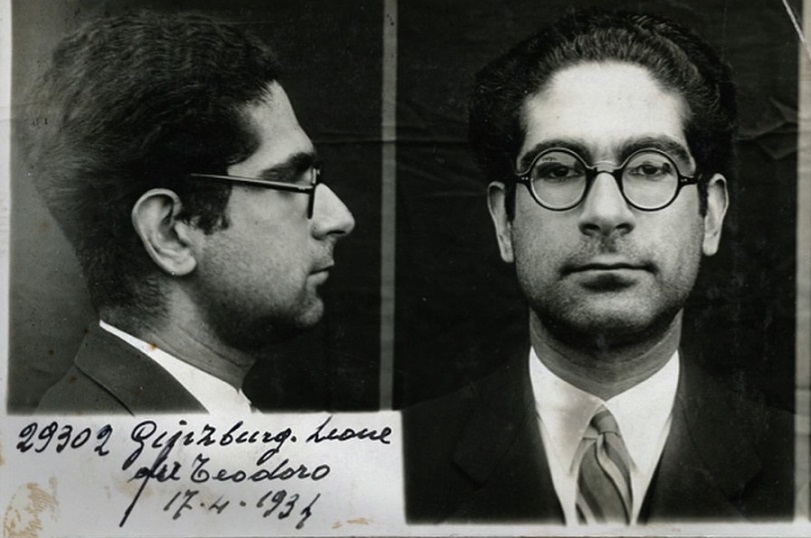
Leone Ginzburg, Turin, 1934.
Leone Ginzburg was one of the most brilliant intellectuals of his generation — and writing a biography of him was sure to be a difficult endeavor. Ginzburg’s was a life “short on time,” which met its tragic end in a jail in German-occupied Rome on February 5, 1944. Already decades ago, the philosopher Norberto Bobbio — a childhood friend of Ginzburg’s who saw Fascism from the same classroom — implored historian Angelo D’Orsi: “You must write a biography of Leone.”
It took time for D’Orsi, best known as a scholar of Antonio Gramsci, to create such a study; the work for this book began already in the 1980s. Ginzburg left far fewer traces than the fellow Turin anti-fascist Piero Gobetti, a liberal revolutionary. This biography had to reckon with Ginzburg’s “hard-to-match intellectual power” but also his exceptional moral force as an anti-fascist, expressed in many testimonies gathered in the book.
The strength of D’Orsi’s biography lies in its ability to piece together the cues that he did leave behind. Carlo Ginzburg, son of Leone, and his wife, Natalia Levi, would become among the first exponents of “microhistory.” This biography, too, provides a broader landscape of anti-fascism — while never losing sight of the very individual story at its heart.