How the Myths of “Progressive Neoliberalism” Hollowed Out Australia’s Left
Neoliberalism now dominates Australia's formerly left-wing institutions, marginalizing working-class and socialist politics. Yet the center-left "progressive neoliberal" consensus shambles on, a corpse in search of a decent grave.
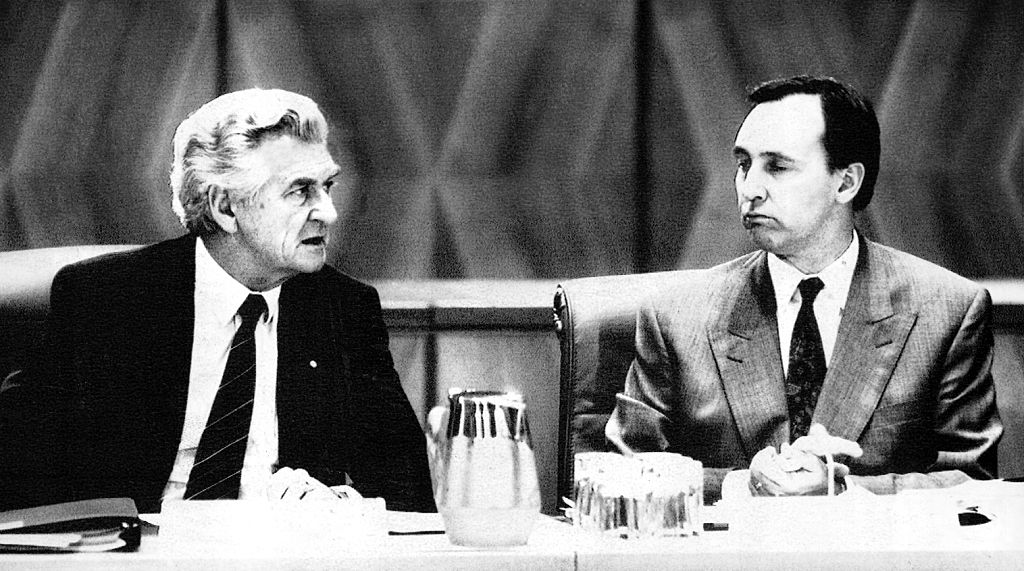
Bob Hawke and Paul Keating in May 1991. (Peter Morris / Fairfax Media via Getty Images)
Over the last decade, left-populist and socialist politics have made a comeback in the United States, UK, and Europe, but so far Australia has been an exception to this trend. Explaining this is as difficult as it is pressing. Geoff Robinson’s book Being Left-Wing in Australia: Identity, Culture and Politics After Socialism, published in 2019, is perhaps the most thorough attempt to do so yet.
Being Left-Wing in Australia traverses the large-scale collapse of collective politics that has plagued Australia for thirty years. Robinson adopts a broad understanding of “the Left” based on how individuals and groups define themselves. He surveys a range of organizations and leaders, from far-left groups to the Australian Labor Party (ALP) and the Greens, not to mention contemporary political archetypes like the “green capitalist” or the “human rights bureaucrat.”
In particular, Robinson pays close attention to the shift away from socialism toward liberalism, and to the development of what he calls “progressive neoliberalism” within the ALP. Despite the continued grip of this doctrine on the party, it constitutes an exhausted political project — Robinson compares it to a “ghost begging for release.”