Scottish Independence Is About Ordinary Scots, Not Alex Salmond’s Ego
Ahead of May's Scottish elections, First Minister Nicola Sturgeon finds herself embroiled in an intense row with her predecessor Alex Salmond, who last week formed his own separate party. The clash between the two is sure to dominate the election campaign — but it's also a distraction from the democratic issues at the heart of the independence movement.
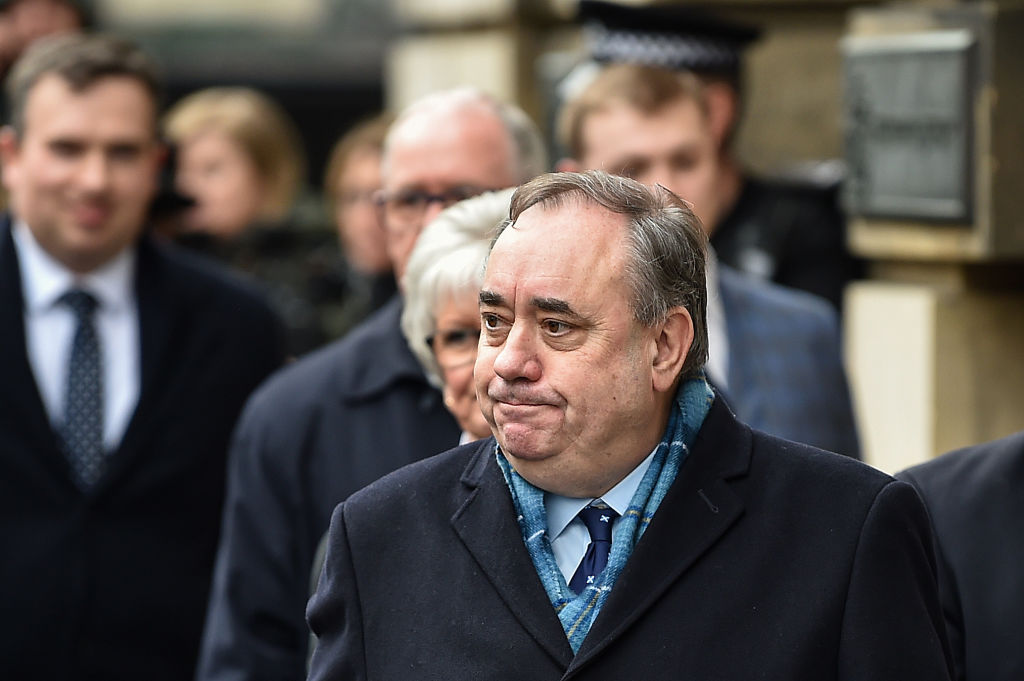
Former Scottish first minister Alex Salmond departing Edinburgh High Court, 2020. (Jeff J. Mitchell / Getty Images)
If elections to Scotland’s devolved parliament rarely bother global news agendas, that started to change after the 2016 Brexit referendum. The vote revealed a split, as a sizable majority (62 percent) of Scottish voters favored remaining in the European Union, unlike their English counterparts. Many observers assumed that Scottish independence would inevitably follow — and, until recently, public opinion was consistently pointing toward that conclusion. Through late 2020, an unprecedented twenty-two consecutive opinion polls showed a majority of Scots favored the breakup of Britain.
Independence also remains the flagship policy of the Edinburgh parliament’s ruling Scottish National Party (SNP). The nationalists have been in power since 2007; since the last referendum of 2014, and the humbling of the once-mighty Scottish Labour at the 2015 UK election, they have ruled effectively unchallenged. With the May 6 elections for Scotland’s Holyrood parliament approaching, polls show the SNP heading for another victory, possibly with one of their strongest ever returns.
Nicola Sturgeon, the SNP’s high profile first minister, styles herself as “fan girl” for Hillary Clinton. She has been leading the SNP government, in the top job or as deputy, for nearly fifteen years, and the laws of recent electoral history suggest she should have fallen long ago. In the “populist moment,” European electorates have been harsh on insiders and career politicians who outstay their welcome. Her ideological agenda — corporate globalization, business paternalism, and liberal feminism — has been a worldwide synonym for electoral failure. Many saw Sturgeon as a social democrat when she became party leader in 2014, but meaningful policy changes have been thin on the ground. And yet, against the odds, she commands record approval ratings.