Making Sense of QAnon With Q: Into the Storm’s Cullen Hoback
With his HBO documentary series Q: Into the Storm, filmmaker Cullen Hoback manages to demystify QAnon, exposing the mechanisms that underpin the right-wing conspiracy theory — above all, how it gives its followers a way of making sense of the spectacular failure of so many powerful institutions.
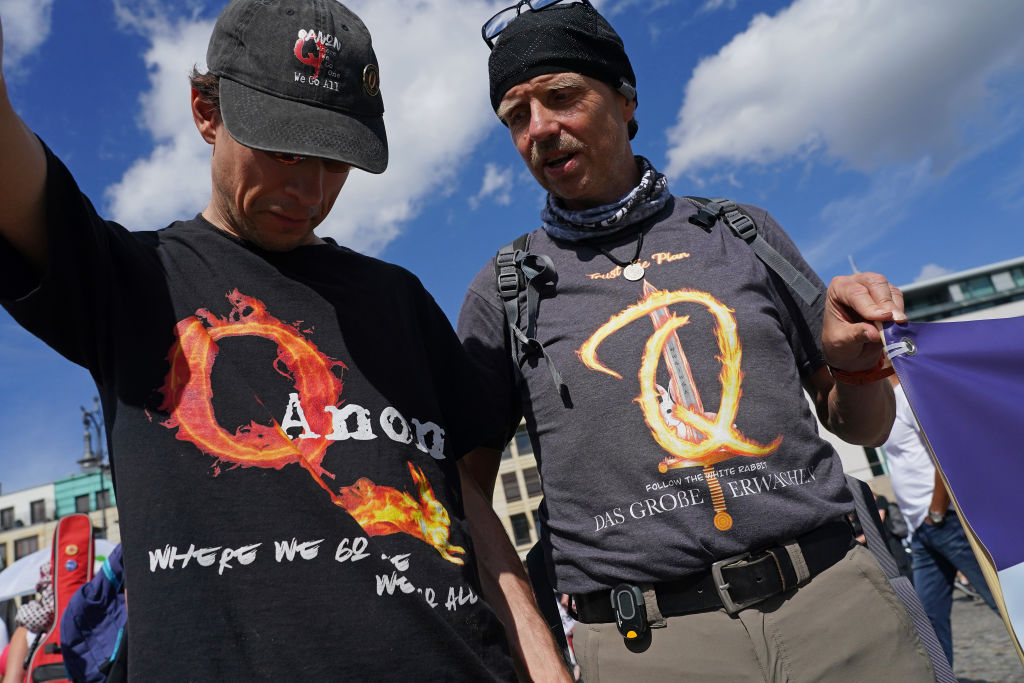
QAnon conspiracy supporters attend a protest of coronavirus skeptics and right-wing extremists in Berlin, Germany, 2020. (Sean Gallup / Getty Images)
By the end of the Trump era, QAnon had firmly made its way into media discourse surrounding the Republican Party and the wider issue of political extremism gestating online. It had also very visibly made its way offline, playing a pivotal role in the events surrounding the January 6 storming of the US Capitol.
But it wasn’t always that way. At one time, not very long ago, the sprawling online conspiracy we now collectively call QAnon was little more than one of many percolating in the obscure recesses of the right-wing internet — and filmmaker Cullen Hoback was there from some of the phenomenon’s earliest days to witness its emergence and growth.
Both are chronicled in the director’s new film Q: Into the Storm, which debuted on HBO last month and concluded its run the weekend before last. Getting in close to some of the Q-verse’s most influential figures, Hoback’s portrait is arguably the most thorough treatment of QAnon yet — and an example of a high stakes creative gamble ultimately paying off.