The Fight for Health Care for All Is Opening Up in the States
There’s no substitute for a national Medicare for All program. But with federal action shelved for now, states like Colorado and Washington are grappling with creating public health insurance alternatives in the face of industry opposition.
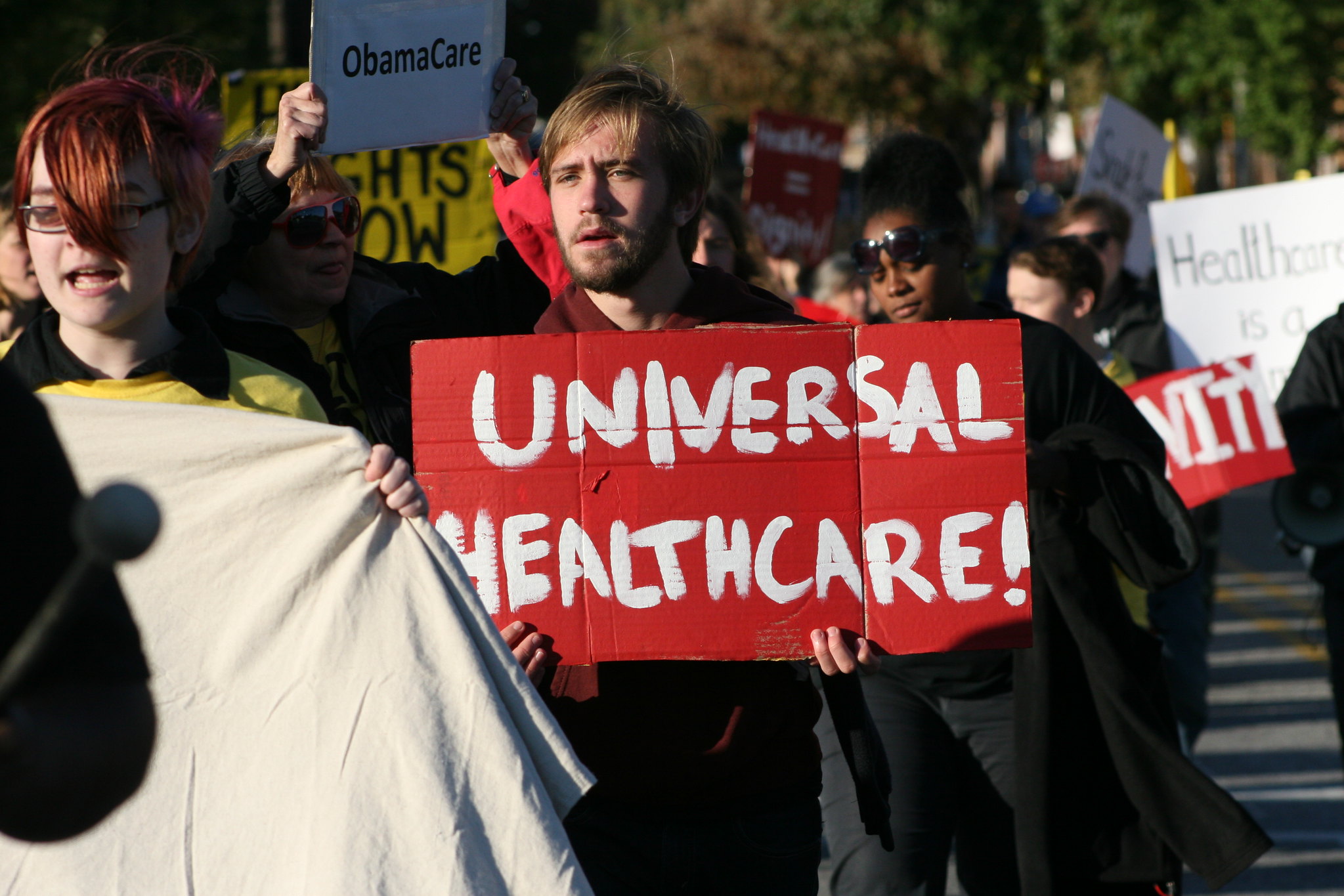
A march to demand universal health care in Maryland in 2013. (United Workers / flickr)
On the campaign trail, Joe Biden promised to create a nationwide public health insurance option that would lower patient costs, improve medical care, and help small businesses deal with soaring health care costs.
While a Medicare for All, single-payer health care system would be simpler, cheaper, and guarantee universal coverage, Biden and Democrats in competitive Senate races pitched a public option as a way to expand and improve coverage without fundamentally changing how most people get health insurance today. And the Congressional Budget Office recently reported that a robust public option could reduce premiums and save Americans big money.
So far, however, President Biden and Democrats in Congress have made little effort to follow through on the pledge, instead opting to funnel tens of billions of dollars to private health insurance companies to put people on expensive insurance exchange plans known for large out-of-pocket costs and high rates of denied claims.