In New York City, Big Tech Is Bailing Out Big Real Estate
Tech firms have been moving into New York since well before the pandemic. But over the course of the last year, that trend has only accelerated, with the biggest companies all significantly expanding their footprints across the city as retail businesses shutter.
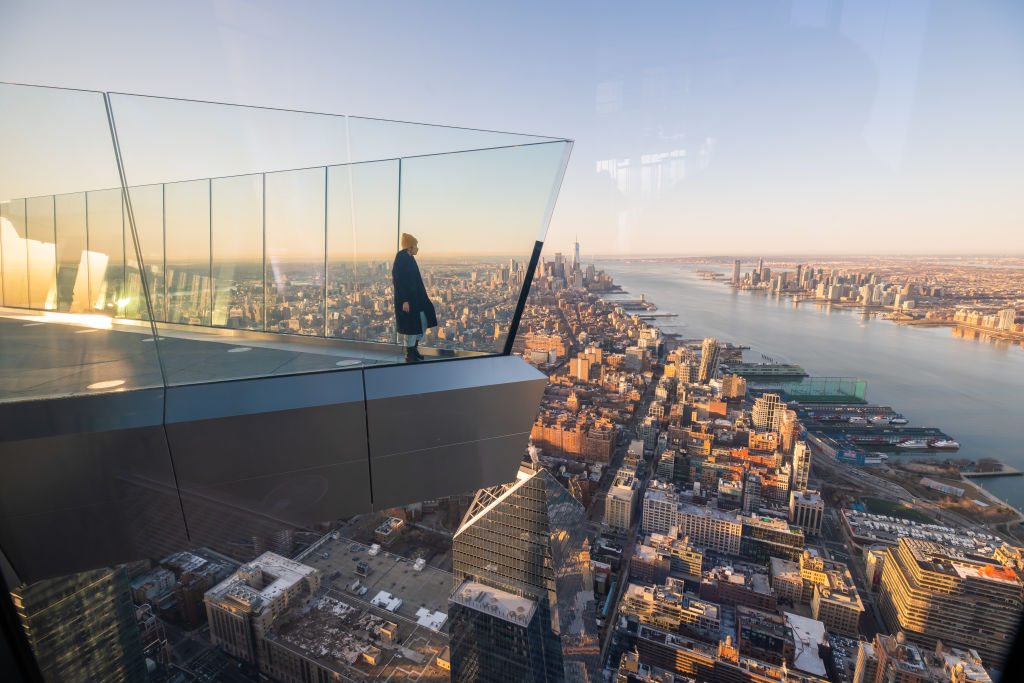
The COVID pandemic has accelerated real estate trends that were already well underway in New York City. (Noam Galai/Getty Images)
On April 11 last year, the United States surpassed Italy in terms of COVID-19 fatalities, with New York City accounting for the bulk of the country’s deaths. In the course of twenty-four hours, nearly four hundred New Yorkers died of the virus. What passed for good news was a front page New York Times headline that read, “Braced for Apocalyptic Surge, New York Avoids Worst, So Far.” We were saving scarce masks and swabs for health care workers while the governor and the mayor dickered over who had the authority to keep schools closed.
The story of New York City’s pandemic spring has been told many times over. The word “epicenter” was used in compound constructions, describing neighborhoods like Corona, Queens, as “the epicenter of the epicenter of the epicenter.” There were constant sirens. There were cooler trucks parked on the streets to hold the dead until burial. The city’s potter’s field on Hart Island was filling with the bodies of people whose families could not afford or arrange any other means of interment.
It has become a truism to say that the pandemic has exposed and expanded deep inequalities, in New York, the United States, and beyond. Low-wage workers and people of color overwhelming had to continue working in person, with far too little protective equipment or social distancing, while living in overcrowded or multigenerational homes in which the virus could spread. Women were overwhelmingly burdened with the impossible task of managing the unpaid work of social reproduction on top of waged work, both of which were often being conducted simultaneously from home.